 Log in


Motorcycle Seat Cover: How to Pick the Right One
A motorcycle seat cover is one of the cheapest upgrades that actually changes how a long day feels. The right one keeps you cooler, takes the load off your sit bones, and saves a cracked stock seat. The wrong one slides around in corners, traps heat, and falls apart by next season. This guide walks through how to pick a motorcycle seat cover that fits your bike, your riding, and your wallet.
Why Riders Buy a Motorcycle Seat Cover in the First Place
Most riders land on a motorcycle saddle cover for one of four reasons. Knowing yours up front makes the rest of the choice simple.
- Heat. A black factory seat bakes in the sun. You stop for fuel, the seat is too hot to sit on, and you do the hot seat dance for the first mile. If this is your pain, you want airflow, not more padding. Our breakdown of why your motorcycle seat gets so hot in summer heat covers the mechanism in detail.
- Comfort on long days. Numb butt sets in after a couple of hours. Riders shopping for the best motorcycle seat pad for long rides usually want their weight spread over a wider area.
- Protection. A cracked or sun faded seat looks rough and lets water into the foam. A cover hides the damage and buys you years before a reseat.
- Grip. A slick vinyl seat slides you forward under braking. A textured cover keeps you planted.
It helps to be honest with yourself about which of these is your real problem. A rider who is mostly fighting heat does not need more gel, and a rider whose seat is cracked does not need to spend on a full reseat to make it look right again. Plenty of riders show up wanting all four at once, and the good news is the right cover handles more than one. But the order you rank them in tells you which feature to weigh heaviest. If you ride in a hot climate, heat usually wins. If you log big days, comfort and grip climb the list together, because a seat that holds you in place stops the constant micro shifting that wears you down over hundreds of miles.
Material Breakdown: Mesh, Gel, Sheepskin, Neoprene
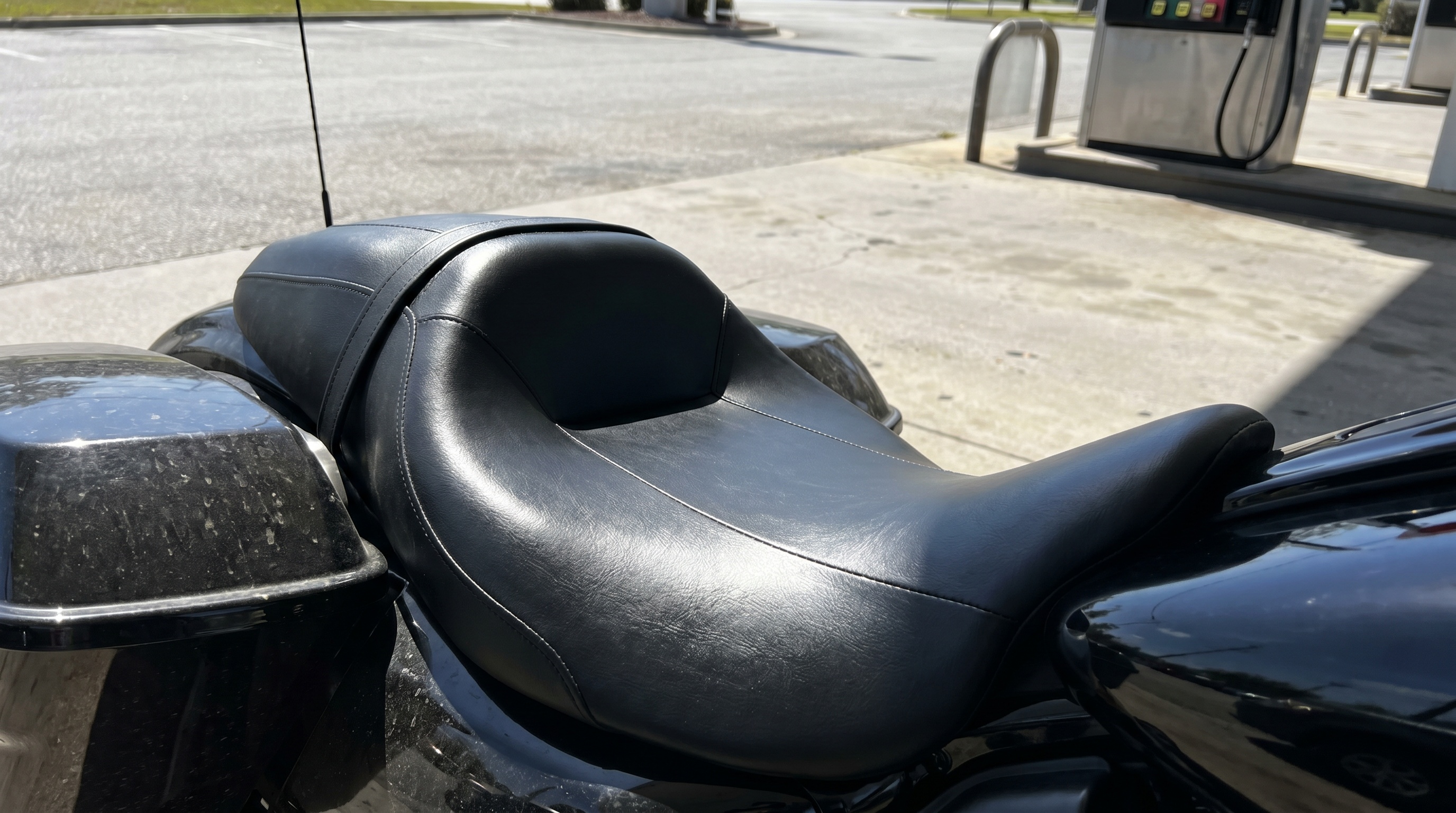
Material is where most riders get it wrong. Each one solves a different problem, and none of them does everything.
| Material | Best at | Watch out for |
|---|---|---|
| 3D mesh | Airflow and heat. Lifts you off the seat so air moves underneath. | Adds little extra cushion on its own. |
| Gel | Cushion on shorter rides. A gel seat pad for a motorcycle softens sharp pressure points. | Holds heat. Gel can go firm in cold and soft in summer sun. |
| Sheepskin | Plush feel. A lambskin motorcycle seat cover breathes better than vinyl and stays cooler in the sun. | Pricey, soaks up rain, and needs real care. |
| Neoprene | Wet weather. A motorcycle seat cover that is waterproof keeps rain off the foam. | Seals heat against you, so it can sweat in summer. |
The way to think about it is which problem each material attacks. Gel pads sit between you and the seat and soak up sharp jolts, which is why they feel great in the parking lot and on a short hop. Over a long hot day, though, gel acts like a heat sponge. It holds the warmth your body puts into it and gives it back, so the relief you felt at the start fades. Sheepskin is the opposite story. It feels plush and breathes far better than bare vinyl, but a real fleece soaks up rain and needs drying and brushing to stay nice. Neoprene keeps water off the foam, which is great for a bike parked outside, yet it seals heat against you on a summer ride. Knowing the trade off before you buy saves you the disappointment of a cover that fixes one thing and creates another.
Riders chasing a cooler ride keep landing on mesh because it tackles the root cause instead of padding over it. Mesh works by lifting you off the seat surface so air can move through the gap underneath you. Instead of trapping the heat your body and the sun pour into the seat, it lets that heat escape and breaks up the layer of sweat that usually builds against your jeans. We made that case in our pick for the best mesh motorcycle seat cover for long summer rides, and you can read the full mechanism on our cool ride page.
Universal Fit vs Custom Fit and When Each Makes Sense
This is the choice that decides whether your cover looks factory or looks like an afterthought.
Universal fit covers are cut to a general shape and stretched over whatever seat you have. They are cheap and quick. The trade off is bunching, loose corners, and a cover that shifts when you move around. Fine for a beater bike, frustrating on a touring rig.
Custom fit covers are cut to one specific bike model. The edges follow your seat, so there is no extra fabric to wrinkle or slide. Custom motorcycle seat covers cost a bit more, but on a bike you ride hard they earn it. If you tour, want a clean look, or your seat has an unusual shape, custom fit is the call.
There is a practical reason custom fit matters beyond looks. Loose fabric is what slides under you in a corner, and a cover that shifts is a cover that bunches into a ridge right where you do not want one. A cut that follows the contours of your seat sits flat and stays put, which means it keeps doing its job in the twisties instead of working itself loose by the next fuel stop. It also wears more evenly, because the fabric is not being stretched and tugged in spots it was never shaped for. On a bike you put real miles on, that even wear is the difference between a cover that lasts seasons and one you replace next year.
What to Check Before You Buy
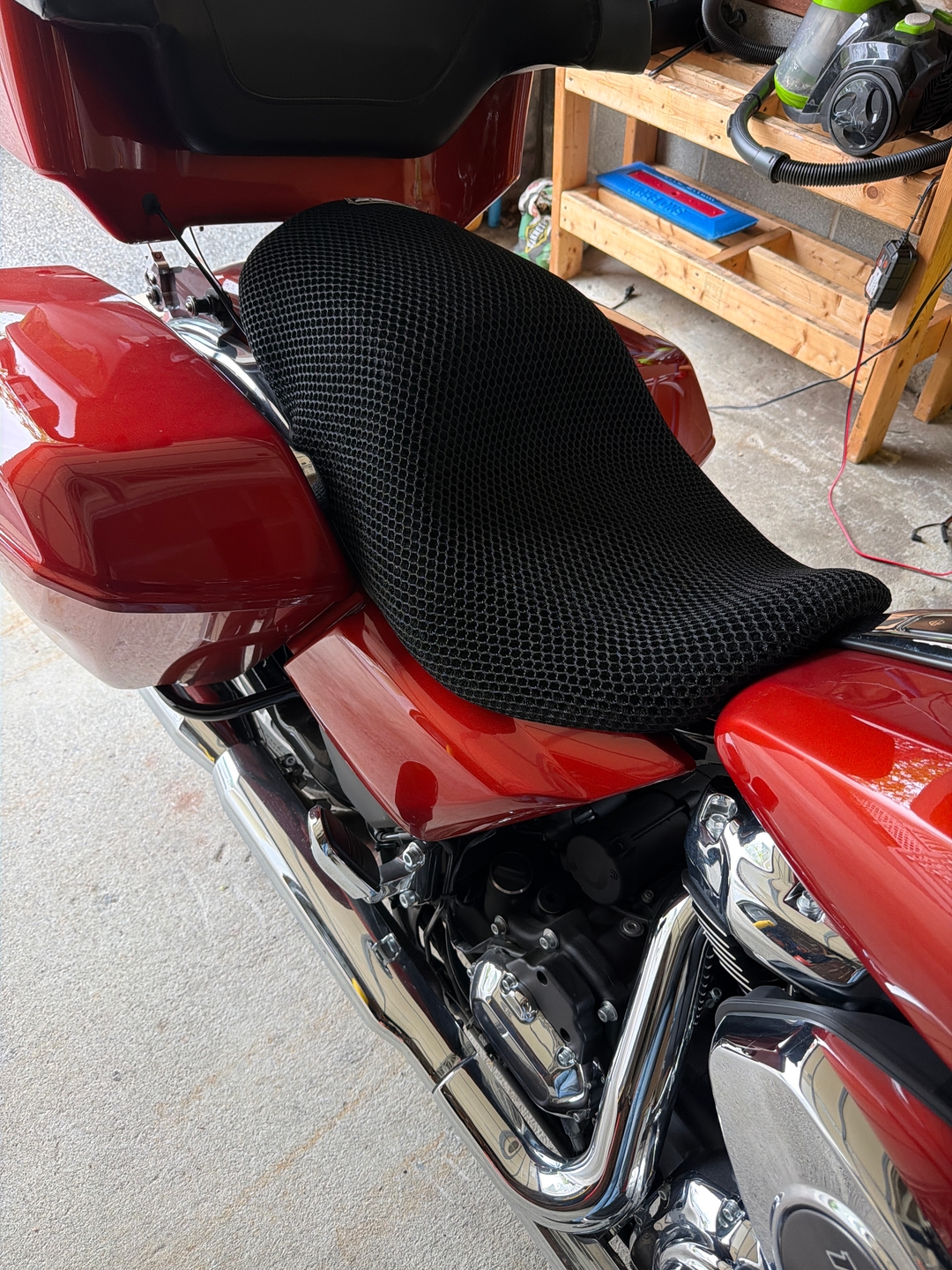
Before you spend a dollar, run through this short list. It catches the problems that show up after the cover is already on your seat.
- Seat shape. A flat solo seat and a stepped two up touring seat are different animals. Confirm the cover is cut for your exact seat, not just your brand.
- Attachment system. This is the big one. Covers that just slip over the top work themselves loose. Look for a cover that anchors firmly under the seat so it stays put in corners.
- Durability. UV and rain destroy cheap fabric. Ask what the cover is made of and how it handles sun and water.
- Drainage. If you ride in rain, a cover that lets water drain through beats one that traps a puddle against your jeans.
- Compatibility with your setup. Running a passenger backrest for a Harley, rear seat luggage, or hard cases? Make sure the cover does not interfere with your mounts.
Worth a note for baggers: heavy touring seats take more abuse and see more sun, so fit and grip matter even more. We dug into that in our guide to the best Road Glide seat cover for long rides.
One more thing riders skip until it is too late. Think about whether your seat is the stock OEM unit or an aftermarket seat from a brand like Sargent, Russell, Corbin, Mustang, Saddlemen, or Le Pera. The shape of those seats can differ from the factory one, which changes how a cover needs to be cut. A cover sized for a stock seat may not follow the contours of a reshaped aftermarket saddle. If you run one of those seats, it is worth confirming the cover can be cut to match before you order, rather than hoping a stock pattern stretches to fit.
How to Read a Product Listing So You Are Not Surprised
A listing can hide as much as it shows. Here is what to actually look for before you check out.
- Fitment. Does it list your exact model and year, or just a vague "fits most"? Specific is better.
- How it attaches. Vague listings skip this on purpose. If you cannot tell how it stays on, that is a red flag.
- Install time and tools. A good listing tells you whether you need tools and roughly how long it takes.
- Returns. Look for a clear return window so you can send it back if the fit is off.
- Real reviews. Read what riders on your bike actually say, not just the star count.
Keep in mind that some listings under "motorcycle hard covers" or "motorcycle rear seat luggage" are not seat covers at all. Read the title twice so you order the right thing.
How to Get the Size and Fit Right for Your Bike
The cleanest way to avoid a fit problem is to start with the model and year of your bike, not just the brand. Two bikes from the same maker can wear very different seats, and a touring seat and a solo seat on the same model are cut differently again. Match the listing to your exact bike before anything else.
If your seat is the stock OEM one, a cover cut to your model should follow the contours without fuss. If you have swapped to an aftermarket seat, that is the time to ask whether the cover can be cut to match before you order. With Wind Rider, a rider running a Sargent, Russell, Corbin, Mustang, Saddlemen, Le Pera, or other custom seat can email the bike and seat brand to service@windriderseatcovers.com and the team works out the right custom measurement. That short email up front saves the headache of a cover that almost fits.
It also pays to think about your install before the cover arrives. Wind Rider anchors with velcro straps that loop under the seat, so the seat comes off the bike, the straps wrap underneath, and the seat goes back on. It runs about 5 minutes and needs no tools, but knowing the steps ahead of time means you are not caught out the first time you open the box. If you have questions on any of this, our FAQ page covers the common ones.
Keeping Your Seat Cover Clean and Lasting
A cover is only as good as the care you give it. Mesh has an edge here because it does not soak up water the way a fleece does, so it dries fast after rain and does not hold a smell. Most of the time a wipe down with a damp cloth and a mild soap is plenty to clear off road grime, bug splatter, and the salt that builds up from a sweaty day. Let it dry fully before you ride so you are not sitting on a damp surface.
The bigger enemy over the long haul is sun. UV is what fades and cracks a bare vinyl seat over the years, and it is hard on any fabric left baking day after day. If you can park in the shade or throw a cover over the bike when it sits outside for long stretches, the whole setup lasts longer. A quality cover takes the UV hit so your foam underneath stays protected, which is part of why a cover buys you years before you ever think about a reseat.
Where Wind Rider Fits on the Shelf
The Wind Rider mesh seat cover is cut to your specific bike model, so the edges follow your seat with no bunching. The 3D mesh lifts you slightly off the surface, so air moves under the rider and heat escapes instead of building up. It also drains water, hides a cracked or faded seat, and grips you in corners. It installs in about 5 minutes with velcro straps that loop under the seat. No tools, you just remove the seat first.
Shipping is free worldwide and it is backed by a 30 day guarantee, so you can try it and send it back for a full refund if the fit is not right. If a cooler, comfier seat is what you are after, check fit for your bike on the Wind Rider product page and see your model in the list.
About the author: Rick Donovan. Touring rider, 25 years on Harleys, writes about long-haul comfort and the gear that earns its place on a long ride.