 Log in


Best Road Glide Seat Cover for Long Rides
If you ride a Road Glide and you log serious miles, you already know the seat is both a strength and a liability. The Road Glide is built for distance. The batwing fairing cuts wind load at 75 mph, the frame-mounted design keeps the front end steady on long sweepers, and the fuel tank holds 6 gallons, giving you a realistic 200 mile range between stops. But by mile 150 on a hot August afternoon, you feel every one of those miles in the seat. Finding the right road glide seat cover for long rides is one of the most practical upgrades a Road Glide rider can make, and it costs a fraction of a new seat.
Why Road Glide Riders Put More Stress on Their Seats
The Road Glide attracts a specific type of rider. The 2024 Road Glide runs on the Milwaukee Eight 114, a 1,923cc engine that pulls comfortably at highway speeds all day. The bike weighs 835 pounds wet. It is not a weekend canyon carver. It is a machine built for sustained highway miles, and its riders plan accordingly.
Iron Butt riders, cross-country tourers, and two-up couples who cover 400 to 600 miles per day all show up on Road Glides in disproportionate numbers. That usage pattern puts the seat under pressure for 6 to 9 hours at a stretch. The rider stays in roughly the same seating position, the same body weight pressing into the same 3 to 4 square inches of pelvic contact, hour after hour. At ambient temperatures above 85°F, the vinyl surface of the stock seat can reach 130°F in direct sun before the engine heat underneath adds its contribution. The result is the hot seat dance: shift, stand, sit, repeat, every 20 to 30 minutes on a bad day.
That daily punishment is what separates a Road Glide rider's seat requirements from a casual weekend rider. You need something that holds up to 10,000 or more miles per riding season, not something that looks good for the dealership photos.
Where the Stock Road Glide Seat Earns Its Keep and Where It Falls Short
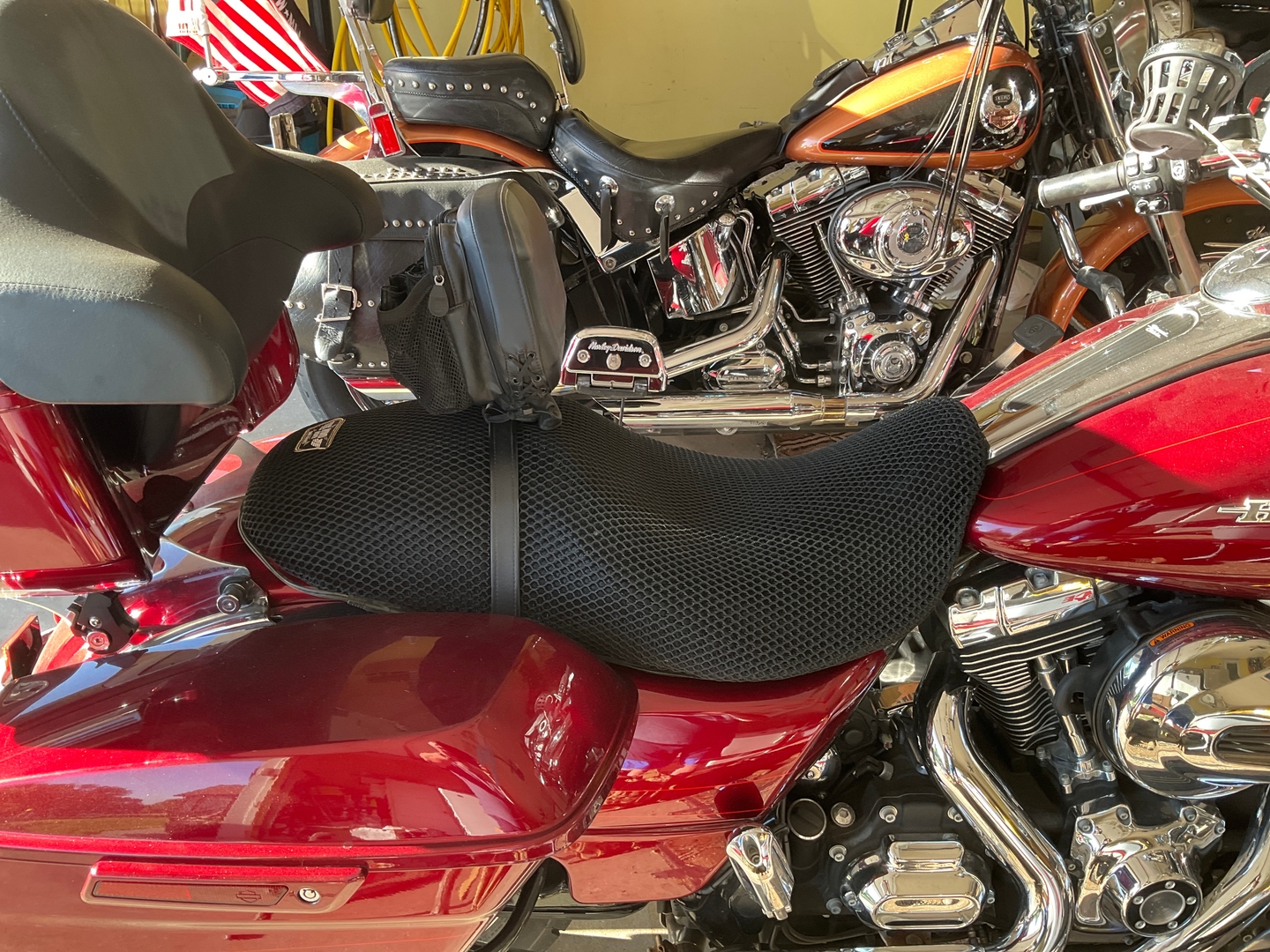
The factory seat on a 2022 to 2025 Road Glide is not a bad piece of equipment. Harley-Davidson's design team understands that their buyers ride farther than the average rider. The stock solo seat uses a multi-density foam configuration with a firmer base layer for support and a softer top layer for initial comfort. For riders under 200 pounds on rides under 2 hours, the stock setup performs reasonably well.
The problems start around the 90 minute mark. Factory polyurethane foam compresses 18 to 22 percent under rider weight during the first hour of riding. Once that compression sets in, the softer top layer has lost its cushioning job and you are sitting closer to the firmer support layer underneath. The seat does not recover until the next day.
The second issue is the vinyl cover itself. Vinyl is practical for weather resistance, but it traps heat and moisture with no path for either to escape. There is zero airflow between the rider and the seat surface. On a 95°F day in Texas or Arizona, that creates a 30 to 40°F temperature difference between the seat surface and ambient air, all of it trapped against the back of your riding pants. Sweat accumulates with nowhere to go, which adds friction and makes the foam compression feel worse than it actually is.
A full reseat from a shop like Sargent or Russell costs between $400 and $700 for a Road Glide application and requires removing the seat and shipping it. A seat cover installs in about 5 minutes with no tools and costs a fraction of that. For riders who want to test an airflow solution before committing to a full rebuild, a seat cover is the obvious first step.
Seat Cover Options Compared for Road Glide Touring
Riders shopping for Harley Davidson seat covers for distance riding generally land on four options: gel pads, sheepskin covers, neoprene covers, and 3D mesh covers. Each works differently and suits a different type of problem.
| Cover Type | Heat Relief | Wet Weather | Install Time | Best For |
|---|---|---|---|---|
| Gel pad | Low (traps heat) | Poor (holds moisture) | 2 minutes | Short rides, pressure point relief |
| Sheepskin | Moderate (breathes naturally) | Poor (soaks wet, dries slow) | 5 to 10 minutes | Cool climates, dry regions |
| Neoprene | None (seals heat in) | Good (weather resistant) | 5 minutes | Protecting seat from rain and UV |
| 3D mesh | High (active air gap) | Good (drains fast, dries fast) | About 5 minutes | Hot weather, long haul touring |
Gel pads add weight, typically 1 to 2 pounds, and generate their own heat from body contact. They are useful for cushioning short trips but on rides over 2 hours the gel warms up and the thermal benefit disappears. Sheepskin is genuinely breathable but it soaks through in rain and takes 3 to 4 hours to dry, which makes it a poor choice for mixed-weather touring in the Midwest or Southeast. Neoprene is the right answer if protecting the factory vinyl from UV cracking and rain damage is the priority, but it adds no comfort and actively holds heat in.
3D raised mesh is the option built specifically for the problem Road Glide riders describe. The mesh structure lifts the rider approximately 6mm above the seat surface, creating a continuous air channel that runs front to back. Air moves through that channel as the bike rolls forward. Heat and moisture have a path out rather than building up against the body. If you want to understand more about why motorcycle seats trap heat in the first place, our post on why your motorcycle seat gets so hot in summer heat covers the thermal mechanics in detail.
What to Look For in a Harley Seat Cover Built for Long Distance
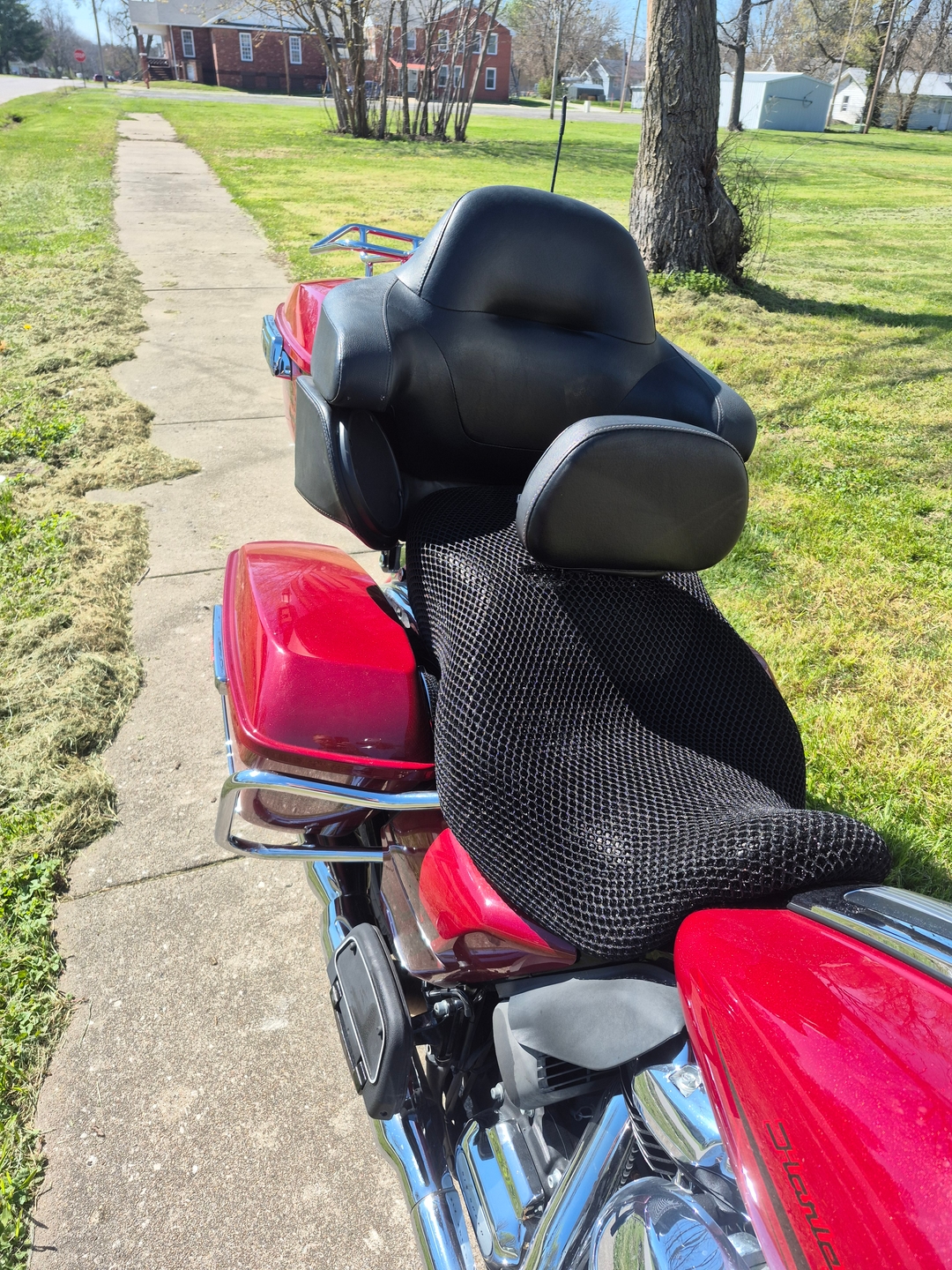
Not all mesh covers are built the same. A Road Glide seat has a specific shape: the solo seat has a pronounced bucket contour with a raised rear berm, and the two-up models add a passenger section with its own profile. A cover cut for a generic cruiser or a flat sport bike seat will bunch, gap, or slip on a Road Glide because the curves do not match.
Here are the five things that separate a quality Harley motorcycle seat cover from a generic universal fit:
- Model-year specific cut: The Road Glide seat profile changed between the pre-2017 Milwaukee Eight era and the current generation. A cover should specify which model years it fits, not just "fits most Harley baggers."
- Secure attachment: At 75 mph on I-40, a seat cover held by loose straps will shift under the rider. Look for a cover that attaches under the seat with velcro straps that grip the seat pan, not just the seat edge.
- Mesh density appropriate for body weight: Lighter mesh collapses under riders over 220 pounds and loses the air gap within 30 minutes. The mesh structure needs enough rigidity to hold the 6mm gap under sustained load.
- Quick dry surface: If you ride through rain or pull off in a downpour, the cover should drain and dry in under 30 minutes so you can get back on the bike without sitting on a wet sponge.
- Two-up compatibility: If your Road Glide is set up for a passenger, the rear section cover needs its own contour match, not just an extension of the solo seat pattern.
If you are also thinking about how to get your bike ready for a major ride weekend, the post on how to prep your seat for Memorial Day weekend rides is worth reading before you make your decision. It covers seat condition checks alongside gear prep that most riders skip.
How Wind Rider Fits the Road Glide Without Modification
Wind Rider builds its seat cover specifically for the Road Glide seat geometry, not a generic bagger pattern. Each cover is cut to match the actual contours of the Road Glide solo seat or the two-up configuration, so the mesh sits flush across the bucket shape without bunching at the rear berm or gapping at the sides. Rider photos and owner reviews for this exact bike are on our Road Glide seat cover page.
Installation takes about 5 minutes with no tools. The cover attaches under the seat using velcro straps that wrap around the seat pan and grip securely, so the cover does not shift even at highway speeds above 70 mph. There is nothing to drill, glue, or permanently modify. The factory seat stays intact underneath. If you ride in rain and the cover gets wet, the mesh drains within minutes and the surface is dry again well before your next fuel stop.
Wind Rider also works over most aftermarket seats. Riders running a Sargent, Corbin, or Mustang seat on their Road Glide can email service@windriderseatcovers.com with their bike year and aftermarket seat brand to get a custom measurement workflow. The process is the same whether you are on the stock seat or a full custom build.
For riders who have hit the wall on stock seat comfort and are weighing a full reseat against a cover, the cover is the lower-risk move. You get the airflow benefit on your next ride, the factory seat is unmodified, and the cost is a fraction of a shop reseat. See the full details and check availability for your Road Glide at the Wind Rider Harley Davidson seat covers collection.
The Honest Verdict on Road Glide Seat Comfort Upgrades
There is no single answer that works for every Road Glide rider. Riders under 175 pounds doing rides under 3 hours may find the stock seat perfectly acceptable through a full season. Riders who regularly cover 300 to 500 miles per day in temperatures above 85°F will feel the heat and foam compression problem within the first riding weekend.
For that second group, a mesh seat cover is the right starting point before committing to a $500 reseat. It addresses the two specific failures of the stock seat, heat and moisture buildup, without touching the seat itself. If you ride a Road Glide and you are still doing the hot seat dance every 30 minutes on a summer day, the cover is the quickest test available.
For riders exploring the full range of seat covers for Harley Davidson motorcycles across different models, the Wind Rider product page lists compatible makes, models, and years with fitment details so you can confirm the right cover before ordering.
About the author: Rick Donovan. Touring rider, 25 years on Harleys, writes about long-haul comfort and the gear that earns its place on a long ride.