 Log in


How to Prep Your Seat for Memorial Day Weekend Rides
Memorial Day weekend is the first real test of your setup for the year. For most touring riders in the US, that means 3 to 5 days in the saddle, temperatures climbing into the mid to upper 80s across the South and Southwest, and a seat that has been sitting in a garage since October. If you have not done a proper memorial day long motorcycle ride seat prep before, this weekend will teach you fast. Here is how to get it right before you roll out.
Why Memorial Day Weekend Is the First Real Test of Your Season
Most riders log fewer than 500 miles between November and March. That means your seat foam has been compressed, your seat cover has been sitting under UV exposure or fluctuating garage temps, and your body has lost its riding calluses from winter. Then Memorial Day arrives and suddenly you are looking at a 1,200 mile weekend with stops in Nashville or the Ozarks.
The numbers back this up. The Motorcycle Industry Council reported that May is consistently one of the top 3 months for miles ridden in the US, and weekend rally attendance spikes sharply over Memorial Day. Rolling Thunder in Washington DC historically drew over 400,000 riders before its retirement. That kind of multi day saddle time after months of short rides is exactly the scenario that turns minor seat discomfort into a serious problem by day 2.
Your body also adjusts slowly. Research on saddle discomfort in cycling and long distance riding shows that riders need roughly 4 to 6 consecutive hours in the saddle to identify real pressure point issues, not the 30 minute shakedown most people do before a big trip.
How to Inspect Your Seat Before a Multi Day Ride
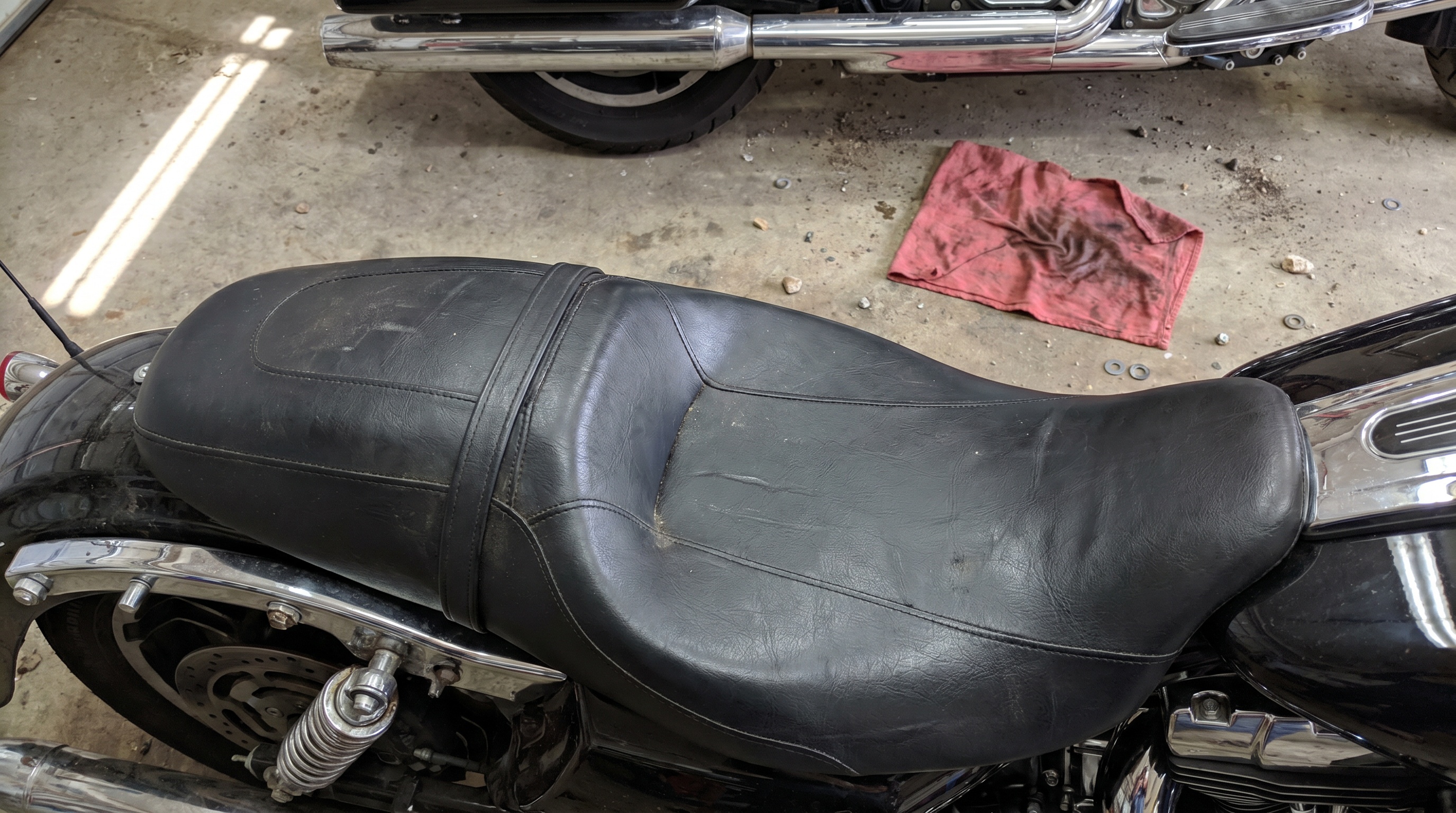
A quick visual pass is not enough. Here is what to actually check in the 2 weeks before you leave.
- Press test the foam: Sit on the seat in your full riding gear and press your hand into the area directly under your sit bones. Factory polyurethane foam compresses 18 to 22 percent under rider weight when new. If the foam feels like it bottoms out immediately or takes more than 4 seconds to recover when you stand up, the cell structure has broken down and you are sitting closer to the pan than the cushion.
- Check the seams and bolster edges: Run your finger along every stitched seam. Any thread pulling, fraying, or gaps wider than 2mm means water and UV exposure will accelerate the damage over a multi day ride in May rain.
- Look for surface cracking: Stock vinyl seat covers crack when surface temps repeatedly exceed 180°F, which happens in direct sun in the South and Southwest. Hairline cracks less than 1 inch are cosmetic. Cracks running more than 3 inches along a crease or the seat pan edge are structural and will widen quickly under saddle pressure.
- Check the seat mounting hardware: Remove the seat completely. Inspect the seat latch, bolts, and mounting tabs. Loose seats vibrate, shift under load, and change your weight distribution in ways that create fatigue you cannot solve with a seat pad.
- Test for moisture retention: Press a dry cloth firmly against the underside of the seat cover for 10 seconds. Any moisture transferred means the foam is holding water from winter storage and will feel cold and clammy for the first 45 minutes of riding until your body heat dries it out.
What Heat and Humidity Actually Do on Late May Rides
Riders who do most of their miles in spring and fall are often caught off guard by Memorial Day conditions. Late May in the Southeast and Gulf Coast routinely sees surface temps of 90 to 95°F by midday, and humidity above 70 percent. That combination creates a specific type of discomfort that is different from dry desert heat.
Here is the mechanism. In dry conditions, sweat evaporates off your riding gear and carries heat away. At 70 percent or higher humidity, evaporative cooling slows sharply because the air is already saturated. A black vinyl seat surface absorbs solar radiation and can reach 130 to 150°F in direct sun after 20 minutes of parking at a fuel stop. When you sit back down, your body is now conducting heat upward through your jeans while also receiving it from the seat surface. The result is a 10 to 15 degree apparent temperature increase in the seat contact zone that does not appear on a weather app.
The sweat that builds between you and the seat also has nowhere to go when the seat surface is non-porous vinyl. After about 90 minutes, most riders start the hot seat dance, standing on the pegs every few miles just to let air reach the contact zone. On a day with 400 miles planned and a 10 AM departure from Atlanta or Dallas, that is a problem you feel by lunch.
Gear and Seat Upgrades to Sort Out Before You Leave

If your inspection above flagged any problems, here is how to address them in the 2 weeks you have before Memorial Day weekend.
- Foam is bottomed out: A full reseat from a custom shop runs between $300 and $600 and takes 2 to 4 weeks. You may not have time. A mid-layer foam pad sized at least 14 inches wide and 3 inches thick, placed under a seat cover, can restore between 10 and 15mm of effective ride height and cushion in a 24 hour solution.
- Cracked or failing vinyl: A quality seat cover installed over cracked vinyl protects the underlying foam from water intrusion and UV. If the crack is structural and extends to the pan, have it repaired or replaced before a 3 day trip. Water in the foam adds 0.5 to 1.5 lbs of moisture weight and dramatically accelerates foam breakdown.
- Airflow upgrade: If heat and sweat are your issue, a 3D raised mesh cover creates a physical air gap between your body and the seat surface. The mesh layer lifts the rider approximately 6mm off the vinyl, allowing air to circulate under the contact zone and reducing heat buildup on stops. Riders running this setup on long days report being able to ride 4 to 5 hours without standing on the pegs compared to 60 to 90 minute intervals on stock vinyl.
- Riding shorts: Padded base layers rated for 6 or more hours provide additional protection at the sit bone contact points. Pair these with the seat prep above for a layered solution.
Memorial Day Long Motorcycle Ride Seat Prep: The Full Checklist
Use this checklist in the 14 days before your Memorial Day departure to confirm your seat setup is ready for a multi day ride.
- Complete the 5-point seat inspection above at least 10 days before you leave so you have time to address anything you find.
- Ride a minimum 100 mile shakedown run in your full gear at least 7 days out. Pressure points that show up at 90 minutes on a test ride will be severe by hour 3 on day 2.
- Check your seat surface temperature with an infrared thermometer after 20 minutes of parking in direct sun. If you read above 130°F, plan your fuel stops in the shade or fit an airflow cover before the trip.
- Pack a backup seat solution. A quality folded mesh pad takes up less than 2 liters of space in a top case and costs under $50. Having it available on day 3 when fatigue compounds seat pain is worth far more than the weight.
- Hydrate at least 24 hours before your first long day. Dehydration thickens tissue fluid and increases pressure sensitivity, meaning a seat that felt fine on your shakedown may feel significantly worse if you start the day already behind on water.
- Plan your saddle time in 2 to 2.5 hour segments with genuine stops, not fuel only pauses. Standing, walking 5 minutes, and letting the seat cool from 130°F back toward ambient air temperature (roughly 75 to 80°F in most May morning conditions) makes a measurable difference in afternoon comfort.
Why Riders Add a Wind Rider Cover Before Their First Big Ride of Summer
A lot of riders do their seat prep research in the week before Memorial Day and land on the same conclusion: the stock seat is not the problem, the surface is. Factory seats are designed for everyday commuter use, not for 400 mile days in 90°F humidity. The foam is adequate. The vinyl surface traps heat and moisture in a way that foam alone cannot fix.
Wind Rider seat covers use a 3D raised mesh structure to create the 6mm air gap described above. The cover installs in about 5 minutes with velcro straps and fits over the factory seat without tools or modification. There is no waiting on a custom shop. Riders running these covers in hot weather report fewer hot seat dance intervals and drier contact zones on full day rides, which matters most on days 2 and 3 of a Memorial Day weekend when fatigue is already compounding. If you want to see the full airflow mechanism behind the design, the Cool Ride page explains how the mesh layer works in detail. To confirm fit for your specific bike before the weekend, check the Wind Rider product page for availability and your bike's fit with enough lead time to receive it before you roll out.
Memorial Day weekend is 3 days of riding that most of us have been waiting on since November. Get the seat right first and the rest of the trip takes care of itself.
About the author: Rick Donovan. Touring rider, 25 years on Harleys, writes about long-haul comfort and the gear that earns its place on a long ride.