 Log in


Why Does My Motorcycle Seat Get So Hot in Summer Heat
You park for gas, come back two minutes later, and the seat is too hot to touch with bare skin. Sound familiar? If you have ever asked why does my motorcycle seat get so hot, the answer is not one thing. It is a chain reaction of materials, sun exposure, and zero airflow working against you at the same time. Understanding that chain is the first step to fixing it.
This post walks through each piece of the problem so you can make an informed decision about what to do before your next long day in the saddle.
What Actually Causes Heat Buildup in a Motorcycle Seat
Why does a motorcycle seat get so hot? A stock motorcycle seat is built from three layers: a plastic pan on the bottom, a polyurethane foam core in the middle, and a vinyl or synthetic leather cover on top. Each layer absorbs and holds heat independently, and together they act like a storage battery for thermal energy.
Polyurethane foam, the standard material in factory seats, compresses 18 to 22 percent under a rider's weight. That compression squeezes out the small air pockets inside the foam that would otherwise allow some heat to move. Once compressed, the foam conducts warmth directly upward into the seat surface and into the rider. A factory foam core sitting in direct Arizona sun reaches an internal temperature of roughly 140°F after 20 minutes of exposure, even before the engine adds any heat from below.
The plastic base pan reflects almost none of that energy. It absorbs it and retains it. So even after you park in shade, the seat stays hot for 15 to 20 minutes because the stored energy in the pan and foam is still working its way out through the cover.
How Seat Materials Trap and Hold Heat Differently
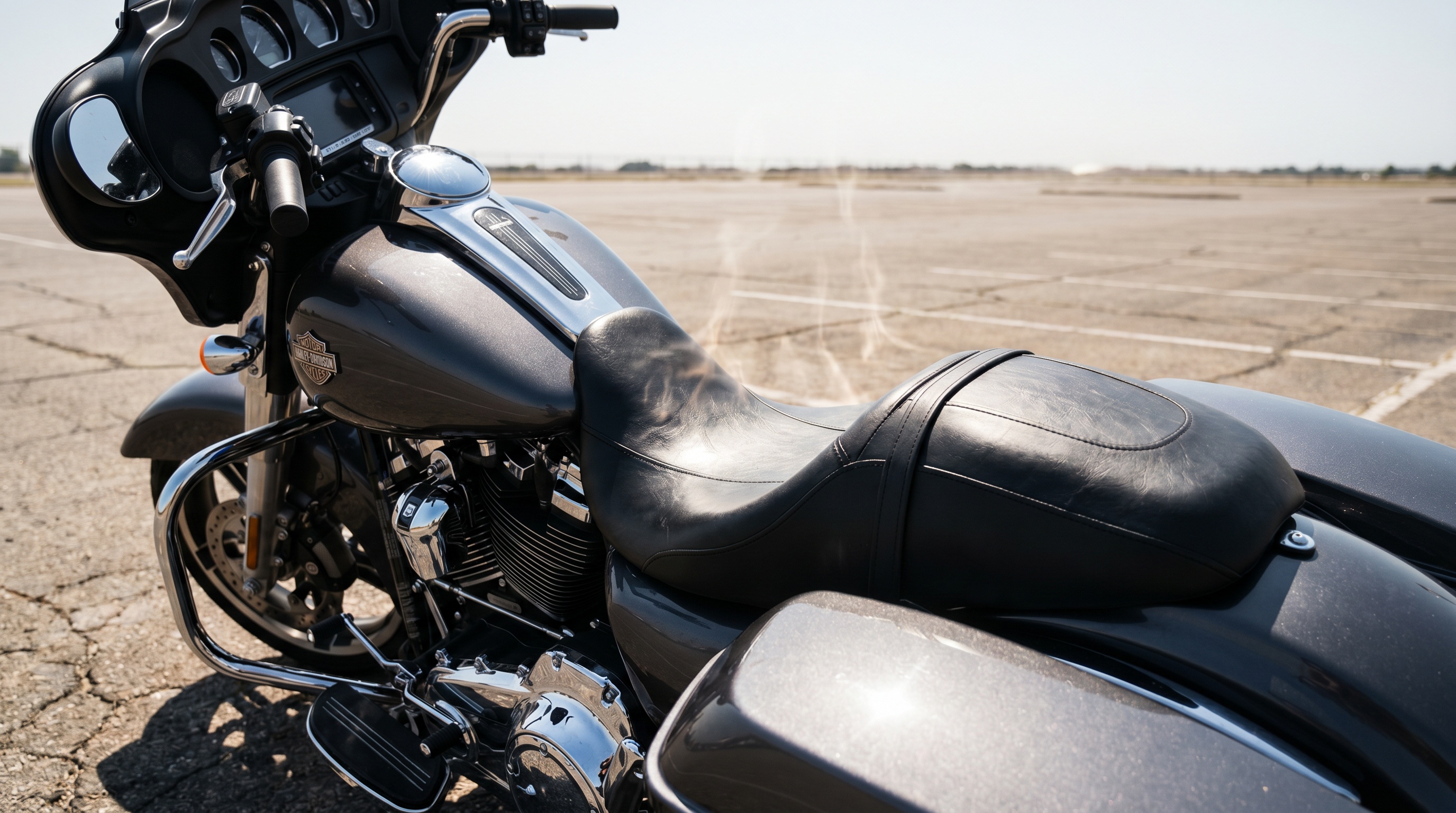
Not all seat covers behave the same way in the sun. The outer cover material is the first surface your body contacts and the layer that determines how fast heat transfers to you.
Standard vinyl seat covers have a low thermal emissivity rating, meaning they absorb radiant heat quickly and release it slowly. A black vinyl seat sitting in direct summer sun at 95°F ambient temperature can reach a surface temperature above 160°F within 30 minutes. Touch it with bare skin at that temperature and you have about 3 seconds before it becomes genuinely uncomfortable.
Leather performs slightly better because its natural porosity allows a small amount of moisture evaporation, which carries some heat away. But genuine leather seat covers on production motorcycles are rare because of cost and maintenance requirements. Most riders are riding on coated vinyl whether they know it or not.
Gel seat pads add a layer that absorbs shock but they do not address surface temperature because gel is a dense, not breathable material. A gel pad acts as a second thermal sponge sitting on top of the first. Riders often report that a gel pad seat is more comfortable for the first 45 minutes of a ride but just as hot or hotter by the 2 hour mark, because the gel itself has reached ambient temperature and is holding it against the body.
Why Dark Colored Seats and Direct Sun Make the Problem Worse
Color matters more than most riders expect. Black absorbs roughly 95 percent of incoming solar radiation. A medium gray surface absorbs closer to 70 percent. That difference of 25 percent translates directly into seat surface temperature on a hot day.
In Phoenix or Las Vegas during July, direct sun pushes the surface temperature of a black vinyl seat above 170°F. At that point the seat is not just uncomfortable. It is actively transferring heat into your body faster than blood circulation and sweat can carry it away. The result is the familiar hot seat dance where you shift your weight every 30 to 60 seconds trying to find a cooler spot that does not exist.
The angle of the sun matters too. Between 10 a.m. and 3 p.m. in summer, the sun hits a horizontal seat surface almost perpendicularly in southern latitudes. That direct angle maximizes the energy per square inch hitting the seat. A seat that gets partial shade from a windshield or saddlebag lid stays 20 to 30°F cooler than a fully exposed section during those hours, which shows just how much raw solar load is driving the problem.
Riding at dawn or dusk is not always an option. On a trip from Tucson to Flagstaff covering 250 miles, most of that mileage happens in the middle of the day regardless of departure time.
How Airflow Under Your Legs Affects Seat Temperature
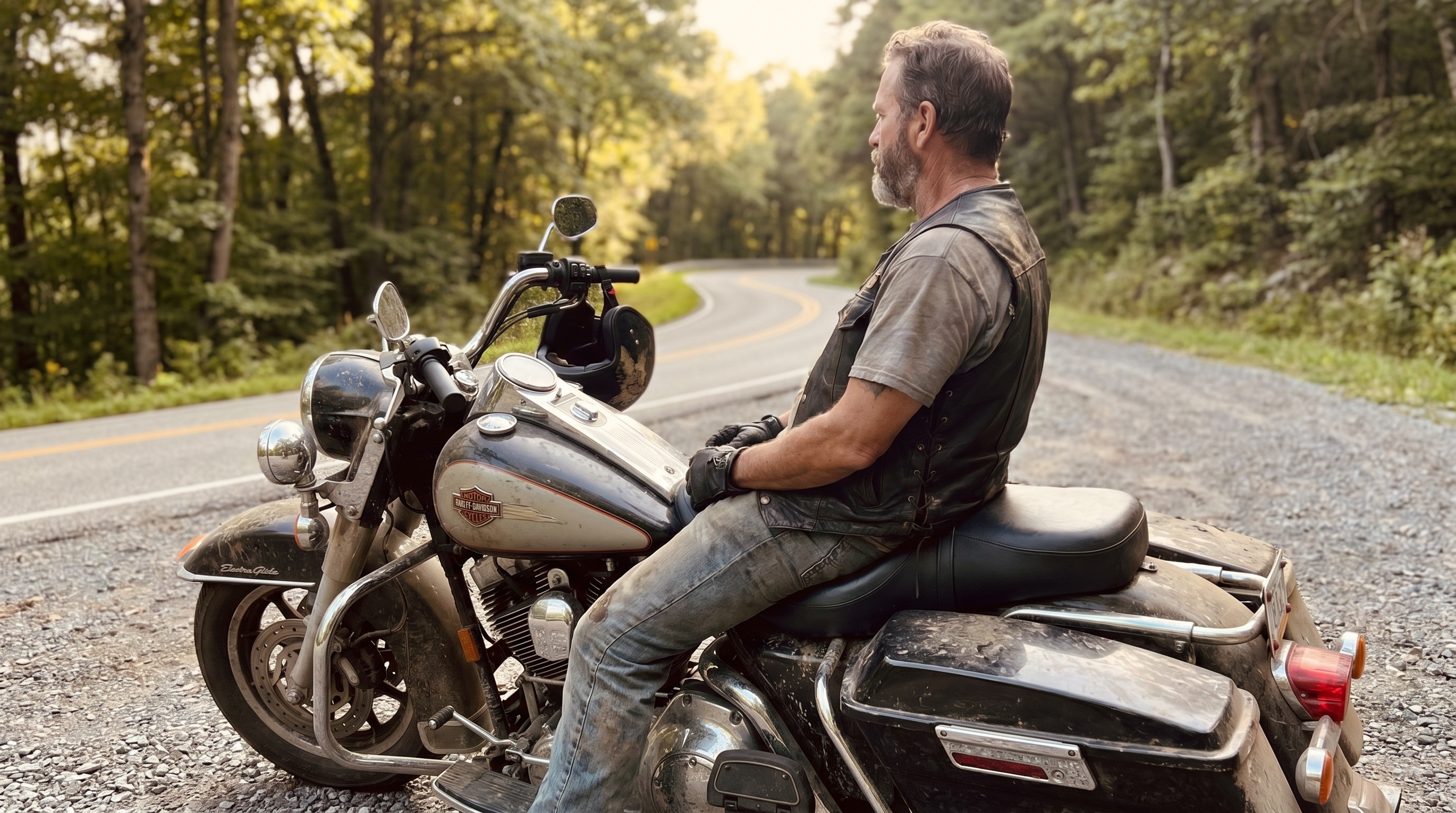
Wind chill at highway speed does real work on exposed surfaces. At 65 mph, moving air can drop the apparent temperature of an object by 20 to 30°F depending on humidity. The problem is that the area directly under the rider gets almost none of that airflow.
Your thighs, pelvis, and the top of the seat form a nearly sealed pocket. Air does not move through that pocket at any meaningful speed. The factory seat cover holds the rider flush against the foam, and whatever heat the body generates or receives from the seat has nowhere to go. Sweat accumulates at the contact points because evaporation requires airflow and there is none.
Riders with highway fairings like those on a 2020 or later Harley-Davidson Road Glide or a 2023 BMW R1250GS with a touring screen actually have less underleg airflow than riders on naked bikes, because the fairing redirects wind around rather than under the rider. That design choice improves wind protection at 75 mph but it also seals off the contact zone between the rider and the seat even more completely.
The physics here are simple. Heat transfer requires a medium. If air is not moving across the seat surface under the rider, conduction is the only mechanism left, and conduction from a 130°F seat into a human body is how a 3 hour ride starts feeling like 6 hours.
How a 3D Mesh Cover Interrupts the Heat Cycle at the Source
The solution to the seat heat problem is not a thicker pad or a cooling gel layer. It is creating airflow in the one place that had none: directly between the rider and the seat surface.
A 3D raised mesh seat cover works by lifting the rider 6mm above the factory seat using a rigid mesh structure. That 6mm air gap is enough for air to move laterally across the entire contact zone while the bike is in motion. At 55 mph, meaningful airflow through a 6mm channel is enough to carry heat and moisture away from the body at a rate that drops perceived seat temperature by 30 to 40°F compared to sitting directly on vinyl.
The mesh itself also absorbs significantly less solar radiation than a solid vinyl surface. Because roughly 60 percent of the mesh structure is open space rather than material, the sun heats less mass. That means a mesh cover sitting in direct sun reaches a surface temperature 25 to 35°F lower than the black vinyl seat beneath it, before any riding airflow is factored in.
After rain, the same open structure drains within 2 to 3 minutes of riding. A solid vinyl seat holds a puddle against the rider until body heat slowly evaporates it, which typically takes 20 to 40 minutes at highway speed depending on humidity. The mesh drains fast and the wet jeans problem disappears much sooner on the road.
Wind Rider seat covers use this 3D raised mesh structure and are sized as custom fit covers for specific models including the Harley-Davidson Street Glide, Road Glide, Electra Glide, and Indian Chieftain, as well as adventure bikes including the BMW R1250GS and Africa Twin. Install time on any of those bikes is about 5 minutes using the velcro strap system with no tools required. If you want to understand exactly how the airflow works on your specific model, the Cool Ride page at Wind Rider breaks it down by bike family.
Practical Tips for Managing Seat Heat Before You Ride
Even without a cover change, a few habits make a measurable difference on hot days.
- Park facing the sun to shade whenever possible. A seat that spends 90 minutes in direct sun versus 90 minutes in shade will differ by 40 to 60°F at your departure time.
- Use a towel or seat cover cloth over the seat when parked. Even a light cotton cloth blocks direct radiation and can keep the surface below 120°F on a 100°F day, versus 160°F uncovered.
- Schedule rest stops at covered locations. On a 400 mile day, 4 fuel stops average about 10 minutes each. Choosing a covered pump lane keeps the seat from resetting to full solar heat every stop.
- Ride in light colored riding pants. Your legs contribute body heat to the contact zone too. Mesh or vented pants allow some airflow on the leg side of the equation even when the seat side is sealed.
- Start early and plan for a midday break. Between 11 a.m. and 2 p.m. in summer, the solar load on a horizontal black seat in the Southwest is at its peak. A 90 minute stop during those hours cuts the highest intensity heat exposure significantly.
- Check your seat cover condition. A cracked vinyl seat cover loses the thin reflective coating applied during manufacturing. Cracks expose raw foam directly to the sun and that foam absorbs heat at nearly double the rate of an intact vinyl surface.
- On bikes with passenger seats rarely occupied, remove the pillion and store it. Less thermal mass parked in the sun means a faster cool down when you return to the bike.
The Seat Setup That Makes Long Rides Feel Like Long Rides Again
A factory seat is designed around cost and aesthetics, not thermal management. Dense foam, coated vinyl, and a sealed contact surface are the cheapest way to pass the look test on a showroom floor. They are also the exact combination that turns a 500 mile summer ride into an endurance exercise in shifting your weight every few minutes.
Understanding why motorcycle seats get so hot puts you in a position to fix the actual cause rather than masking it. The core issue is trapped heat with no escape path. The fix is creating an air gap that gives heat somewhere to go while the bike is moving.
If you want a direct upgrade without refoaming or replacing your entire seat, the Wind Rider mesh seat cover fits over your existing seat in about 5 minutes and starts working the moment you roll out of the parking lot. Riders running it on bikes like the 2022 Road Glide and 2023 Africa Twin report completing 400 to 600 mile days in 95°F heat without the constant weight shifting that makes those rides memorable for the wrong reasons.
About the author: Rick Donovan. Touring rider, 25 years on Harleys, writes about long-haul comfort and the gear that earns its place on a long ride.