 Log in


Best Mesh Motorcycle Seat Cover for Long Summer Rides 2026
If you have ever pulled over at mile 200 just to stand on the pegs and peel damp jeans off a vinyl seat baking at 130°F, you already know why a mesh motorcycle seat cover is the first upgrade serious touring riders make before summer. This guide compares every major option honestly so you can spend less time guessing and more time riding.
Why Mesh Beats Foam Pads, Gel Pads, and Aftermarket Reseats on Hot Days
Most comfort upgrades for motorcycle seats attack the wrong problem. Foam add-ons and motorcycle gel pad seat covers sit between your body and the seat, but they do not create airflow. They simply add a softer layer of material that still traps heat against the vinyl and against your legs. In direct Arizona or Nevada sun, a gel pad surface will reach the same 130°F skin-contact temperature as bare vinyl within about 20 minutes of parking. When you sit down again, you are sitting on a hot sponge.
A mesh motorcycle seat cover works differently because it lifts the rider off the seat surface entirely. The 3D raised structure creates a consistent 6mm air gap between the rider and the factory vinyl. Air moves through that gap constantly while the bike is in motion. At highway speeds of 65 mph or above, that steady airflow lowers seat surface contact temperature by up to 30°F compared to sitting directly on vinyl or on a gel layer.
A full aftermarket reseat from a custom shop, such as a Sargent, Russell, or Corbin unit, runs between $400 and $800 for most touring bikes. That solves the firmness problem but does nothing about heat transfer. Riders who spend $600 on a custom reseat and then discover the new foam still traps heat in July are a very common story on touring forums. The mesh air gap is a structural fix, not a cushioning fix. Those are two different problems.
How the 3D Mesh Structure Creates Airflow Under the Rider
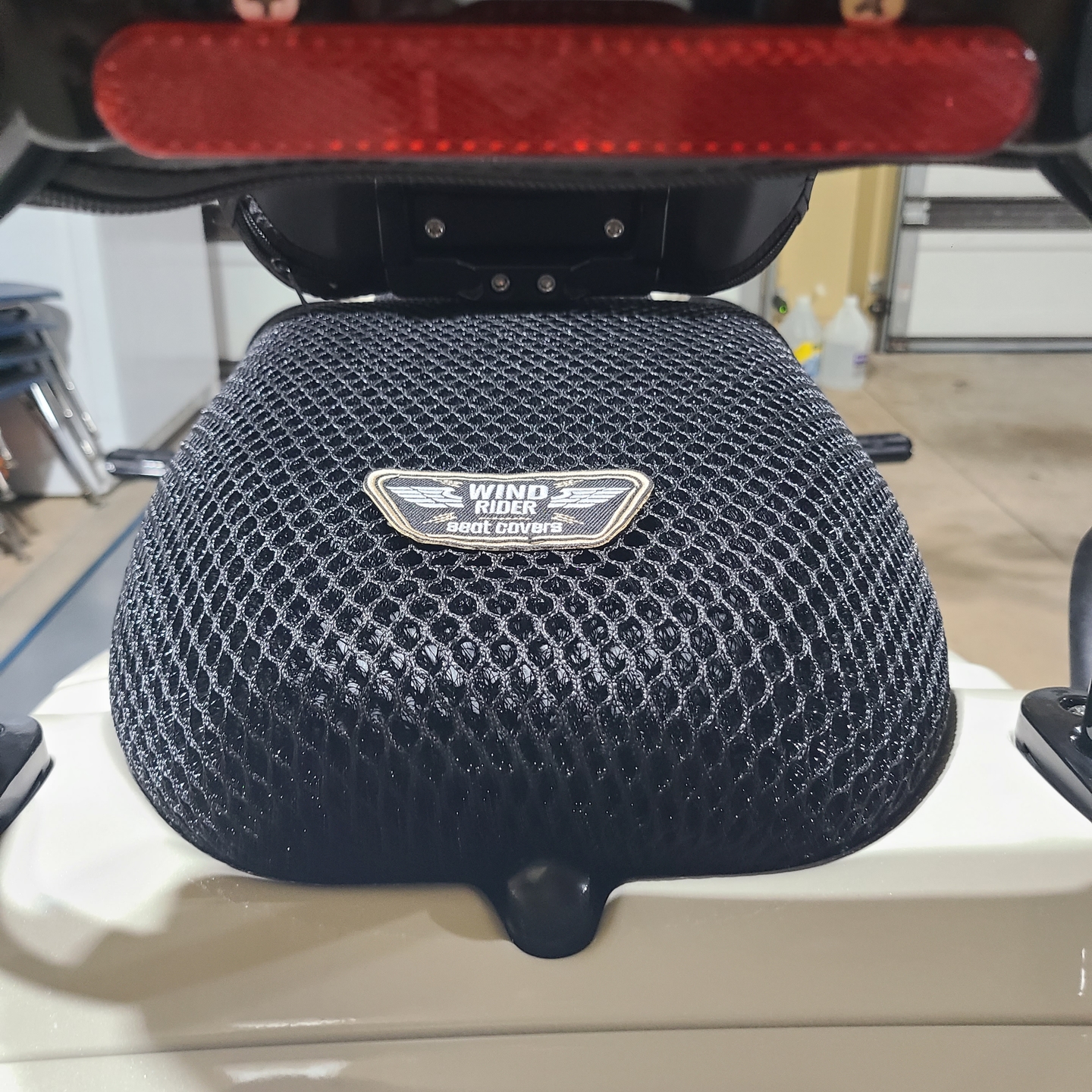
How does a mesh motorcycle seat cover actually work? A 3D mesh seat cover works by suspending a rigid open-weave layer above the factory seat surface. The structure holds its shape under rider weight, typically up to 300 lbs, maintaining the 6mm gap even during long seated periods. Air enters from the sides and rear of the seat, passes through the open mesh cells, and exits continuously as the bike moves forward. This steady air movement reduces both conducted heat from the seat and radiated heat from the sun.
The physics matter here. Vinyl and factory polyurethane foam are poor heat conductors in one direction and excellent heat absorbers in the other. Factory polyurethane foam compresses 18 to 22 percent under average rider weight, closing off any air pockets that might otherwise dissipate heat. The 3D mesh structure does not compress the same way because it is built from semi-rigid woven filament, not foam. It holds the air channel open under load, which is the key mechanical difference between mesh and every foam-based or gel-based alternative.
For riders curious about the full science behind why factory seats build heat so fast, our post on why your motorcycle seat gets so hot in summer heat covers the full mechanism, including how black vinyl absorbs solar radiation and how humid air trapped under the rider raises apparent temperature significantly.
Mesh Motorcycle Seat Cover vs Gel Pad: Head to Head on Heat, Fit, and Price
| Feature | 3D Mesh Motorcycle Seat Cover | Gel Pad Seat Cover |
|---|---|---|
| Air gap created | 6mm raised gap, open to airflow | 0mm, gel sits flush against seat |
| Surface temp reduction | Up to 30°F cooler under direct sun | Minimal, gel absorbs and holds heat |
| Sweat accumulation on 4+ hour rides | Low, airflow wicks moisture | High, gel traps moisture against body |
| Fit type | Custom cut per bike model and year | Universal sizing, loose fit common |
| Install time | About 5 minutes, velcro straps, no tools | 2 to 3 minutes, slip-on or strap |
| Price range | $80 to $150 depending on model | $30 to $90 universal sizing |
| Rider movement on seat | Low slip, mesh grips riding gear | Moderate to high slip, gel is smooth |
| Lifespan | Tested across 12,000+ miles of use | Gel degrades, typically 2 to 3 seasons |
The honest truth about motorcycle gel pad seat covers: they do a good job on rides under 100 miles in mild weather, particularly for riders with pressure-point discomfort on a firm factory seat. If your primary complaint is hard foam and you ride mostly in temperatures below 75°F, a gel pad at $40 to $60 is a reasonable choice. If your rides run over 3 hours or your routes pass through climates hitting 90°F or above, the gel pad is going to leave you doing the hot seat dance at every fuel stop.
The same honest note applies to sheepskin motorcycle seat covers. A quality sheepskin motorcycle seat pad provides excellent pressure distribution and some temperature regulation in cold or dry conditions. Natural wool fibers do wick moisture and provide a soft surface. However, in humid summer heat above 85°F, the wool fibers saturate with sweat during rides longer than 2 hours and begin to trap heat the same way a wet towel does. Riders in the Pacific Northwest or on fall rides often prefer a sheepskin bike seat cover. Riders heading through the Southwest in June through August almost uniformly switch to mesh.
Why Most Riders Choose a Mesh Cover Before a $400 Custom Reseat
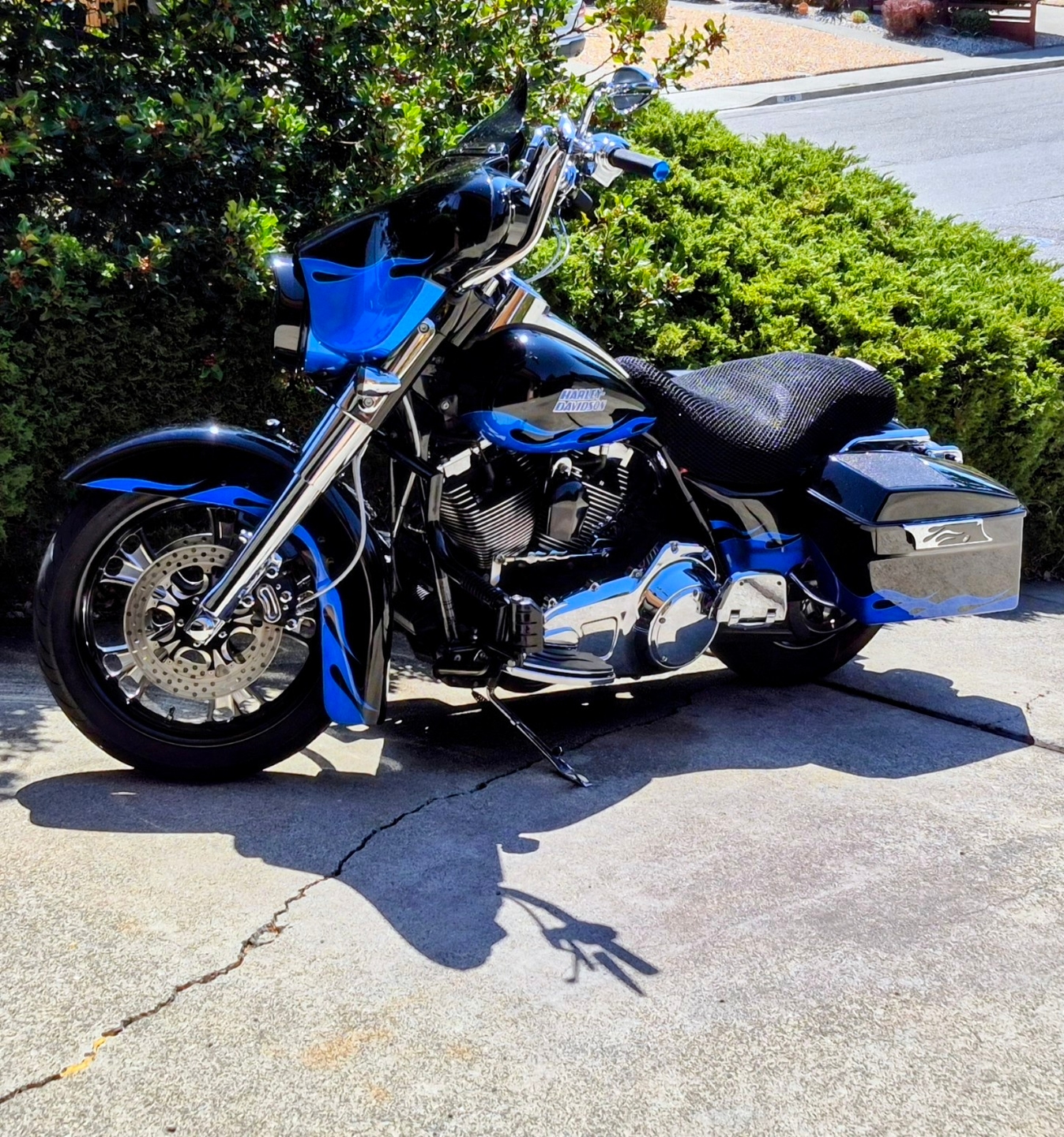
The custom reseat path is appealing because it feels permanent. You pay once, you get shaped foam, premium leather or vinyl, and a seat that feels built for your bike. The problem is lead time and cost. A Sargent seat for a 2023 Harley Davidson Road Glide typically costs $545 to $625 and takes 3 to 6 weeks to arrive. A custom Russell Day-Long seat runs $700 to $900 depending on options. Both are excellent products. Neither one addresses summer heat the way a mesh cover does.
The practical math looks like this. A rider planning a 500 mile ride through the Texas hill country in August has a decision to make in early June. A mesh motorcycle seat cover installs in about 5 minutes using velcro straps with no tools, costs under $150 for most touring models, and is ready the day it arrives. The custom reseat takes weeks, costs 4 to 6 times more, and will still leave that rider standing on the pegs at mile 200 because heat management was never part of the design.
Riders who already own a Sargent, Mustang, Saddlemen, or other aftermarket seat are not left out either. Wind Rider cuts covers for aftermarket seats as well. Customers with an aftermarket seat brand email service@windriderseatcovers.com with their bike model and seat brand for a custom measurement workflow. The cover installs over whatever seat is already on the bike.
If you are planning a summer ride and want a full prep checklist beyond seat comfort, the post on how to prep your seat for Memorial Day weekend rides walks through the full pre-ride routine including seat checks, sun exposure timing, and hydration habits that directly affect how your body responds to heat on long days.
How to Choose the Right Mesh Motorcycle Seat Cover for Your Bike
The single most important factor in selecting a mesh motorcycle seat cover is fit. A universal cover that gaps at the sides or bunches at the front edge creates pressure points that cause more discomfort by mile 150 than the heat problem you were trying to fix. Look for these five criteria when comparing options.
- Cut by bike model and year. A cover built for a 2022 BMW R1250GS will have different seat width measurements than one built for a 2023 Harley Davidson Street Glide. Seat widths vary by as much as 4 inches across popular touring models. Model-specific cuts mean the cover sits flush at the edges without overhang or gaps.
- Mesh structure that holds shape under load. The mesh must maintain its 6mm air gap at rider weights up to at least 250 to 300 lbs. Flat mesh fabric with no raised structure collapses under rider weight and provides no more airflow than bare vinyl.
- Install system that does not slip. Velcro straps that anchor under the seat are the most secure method for a motorcycle seat cover. Covers that rely only on perimeter elastic or loose straps will migrate forward during long rides, creating a wrinkled surface and pressure problems.
- Material rated for UV and weather exposure. A mesh cover that lives outside on a touring bike needs UV-stabilized material that will not degrade after one Arizona summer. Look for covers rated for at least 12 months of continuous outdoor exposure.
- Compatibility with your actual seat. If you have added a passenger seat, a wider aftermarket unit, or a custom upholstered seat, confirm the cover is cut for that specific seat before ordering. An ill-fitting cover is worse than no cover.
Bike-specific fit also matters for mesh motorcycle seat covers and motorcycle cooling seat covers sold under various brand names. The airflow benefit only works if the cover sits correctly on the seat and the edges are sealed enough to direct air through the mesh rather than around it.
Wind Rider for Riders Done With Hot Summer Seats
Wind Rider builds mesh seat covers for motorcycles cut to specific bike models and years, including major touring platforms from Harley Davidson, BMW, Honda, Kawasaki, Ducati, Indian, and others. The 3D raised mesh structure maintains the 6mm air gap under full rider weight, installs in about 5 minutes using velcro straps with no tools, and covers factory seats as well as most popular aftermarket seat brands. Riders on 500 mile summer days in 95°F heat report completing full days without standing on the pegs to cool down. The cover comes with a 30 day guarantee. Send it back within 30 days for a full refund if it does not perform.
Check availability for your specific bike and find the right fit for your touring setup before the hottest months of the year arrive.
About the author: Rick Donovan. Touring rider, 25 years on Harleys, writes about long-haul comfort and the gear that earns its place on a long ride.