 Log in


Motorcycle Gel Pad Seat Covers: Do They Really Help?
You feel it around the second hour. Your sit bones start to ache, you shift in the saddle, and the seat that felt fine in the parking lot now feels like a plank. So you start shopping, and the first thing every forum points you toward is a motorcycle gel pad seat cover. The pitch sounds perfect. Soft gel that molds to your body and soaks up the miles. But do gel pad seat covers really help on long rides, or do they trade one problem for another?
This is an honest look at how gel behaves under a rider, where it works, and where it falls short. We will also compare gel against raised mesh and sheepskin so you can pick what actually fits how you ride.
What Gel Pad Seat Covers Claim to Do
Gel pads market themselves on one idea: pressure relief. The gel insert is meant to spread your weight over a wider area so your sit bones do not carry the full load against a hard seat base. Brands like Conformax, Skwoosh, Pro Pad and others sell gel inserts and gel topped pads aimed at touring riders, commuters, and anyone facing a long day in the saddle.
The promise is real on paper. Gel does redistribute pressure, and for a rider whose biggest complaint is a sore tailbone after an hour, that can take the edge off. The trouble is that pressure is only half the story of seat comfort. The other half is heat and sweat, and that is where gel starts to work against you.
How Gel Behaves Under Sustained Riding Pressure and Heat
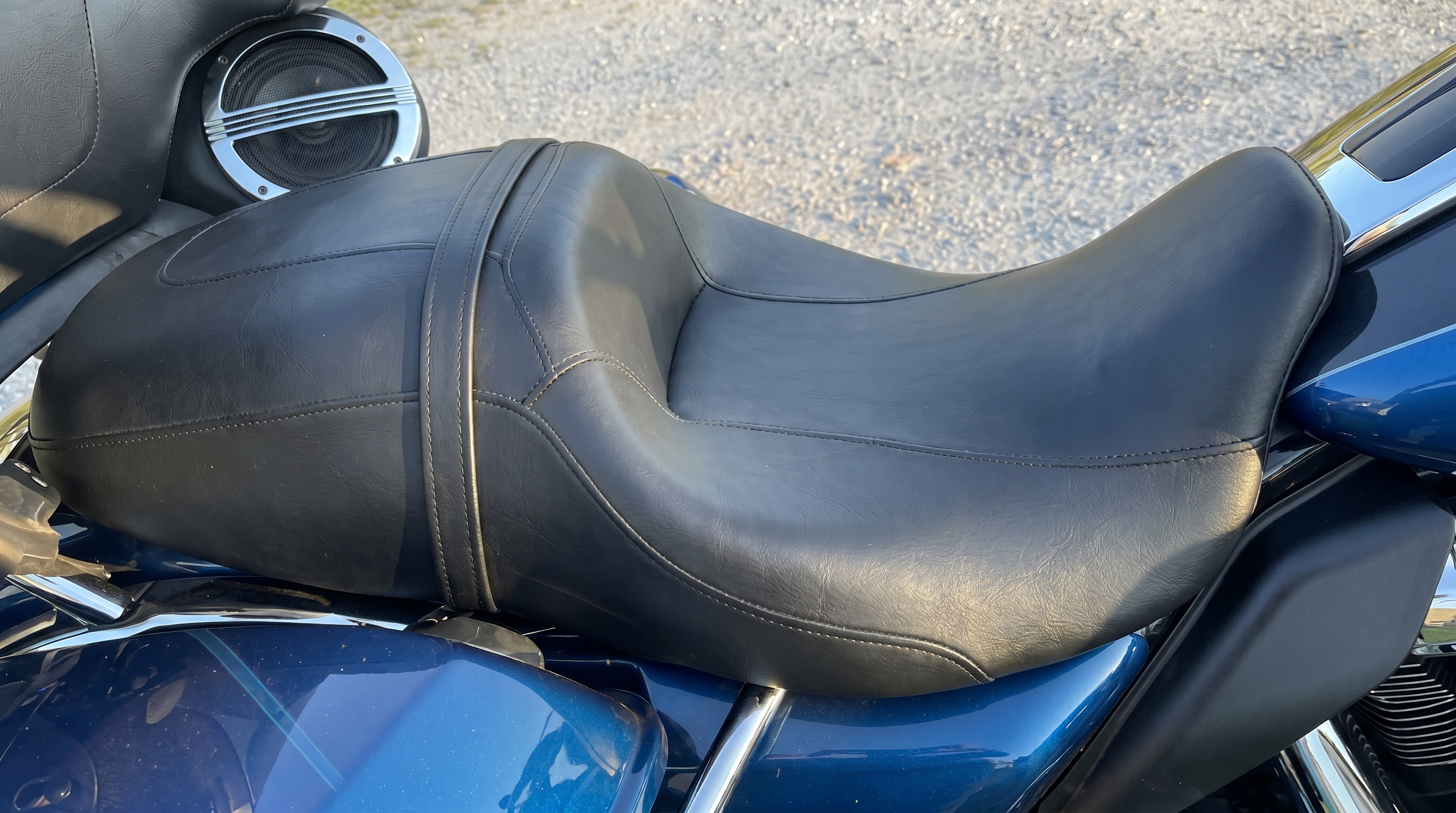
Gel is a dense, semi solid material. When you sit on it, it shifts under your weight and spreads load. That feels great for the first few minutes. But gel does not breathe. It sits flat against the seat and flat against you, with no path for air to move between.
Here is what that feels like in the real world. You roll out at dawn and the seat is cool, the gel soft, everything plush. By mid morning you have been planted in one position for an hour or more. A motorcycle seat does not let you move around the way a car seat does. Your weight stays parked on the same two points, and the gel under those points slowly stops giving. It has already spread as far as it is going to spread. From there it just holds the shape it took and pushes back, and the soft feel you paid for fades into a firm, packed surface that no longer absorbs much of anything.
Two more things happen as the day stretches out. First, gel slowly warms up. It holds the heat from your body and the heat from the sun beating on a dark seat, and it gives that warmth back to you for the rest of the day. Once gel is hot, it stays hot. Pull over for fuel, walk into the gas station, come back, and the gel is still warm under you. A vinyl seat in the shade will at least cool a little while you grab a drink. Gel does not. It is a thermal sponge that soaked up everything you and the sun put into it, and it holds that load like a stone that sat in a fire.
Second, gel can firm up and feel less forgiving as the day drags on, especially in cold weather where it stiffens. The plush feel you bought it for is not constant. It changes with temperature and with the hours you put on it. On a cold morning ride the gel feels harder under you than it did in the warm shop where you bought it, and the pressure relief you were counting on shows up late or not at all. On a brutally hot afternoon it goes the other way, soft and warm and clammy, working against you instead of for you. For a short commute this rarely matters. For a 500 mile day, where you are chasing every bit of comfort you can find, that swing in feel is exactly the kind of thing that wears a rider down.
The Heat Retention Problem Most Gel Pad Reviews Skip
Here is the part most reviews gloss over. The thing that makes a long ride miserable in summer is not just pressure. It is the wet jeans, the sweaty seat after a fuel stop, the standing on the pegs to let air hit your backside. We dig into the full mechanism in our guide on why your motorcycle seat gets so hot in summer heat, but the short version is this: heat and trapped sweat are the enemy, and a solid material sitting flat against you makes both worse.
Gel solves the pressure complaint while quietly making the heat complaint worse. It is a sealed surface with no airflow. Your body heat has nowhere to go, sweat has nowhere to escape, and the gel itself becomes a warm slab you are sitting on. Riders who buy gel for summer touring often find they are doing the hot seat dance just as much as before, only now their tailbone is slightly happier about it.
Think about the chain of events on a hot day. You sweat into your jeans, and the gel under you has no way to let that moisture out. So it sits there, trapped between you and a surface that will not pass air. The denim goes damp, then wet, then stays wet because nothing is drying it. Now add a roadside stop. You walk away from the bike for ten minutes and the seat bakes in full sun while you are gone. You come back, swing a leg over, and you are sitting on a hot, clammy surface that pulls a fresh round of sweat out of you within the first mile. That is the loop motorcycle gel pad seat covers cannot break, because the very thing that makes them feel soft, the sealed dense gel, is the thing that locks the heat and the moisture against your body.
It gets worse on a humid day. When the air itself is heavy, sweat does not air off your skin easily even in a breeze, so anything sitting flat and warm against you turns into a soggy patch you cannot escape. You will feel it most where your weight sits hardest, right where the gel is doing its job on pressure and its worst on heat. The two problems live in the exact same spot, and gel can only ever win one of them at a time. That is the tradeoff nobody mentions in the five star reviews. A material that fixes pressure but blocks air is only half a solution for hot weather riding.
Gel vs Raised Mesh: Airflow and Pressure Relief Side by Side
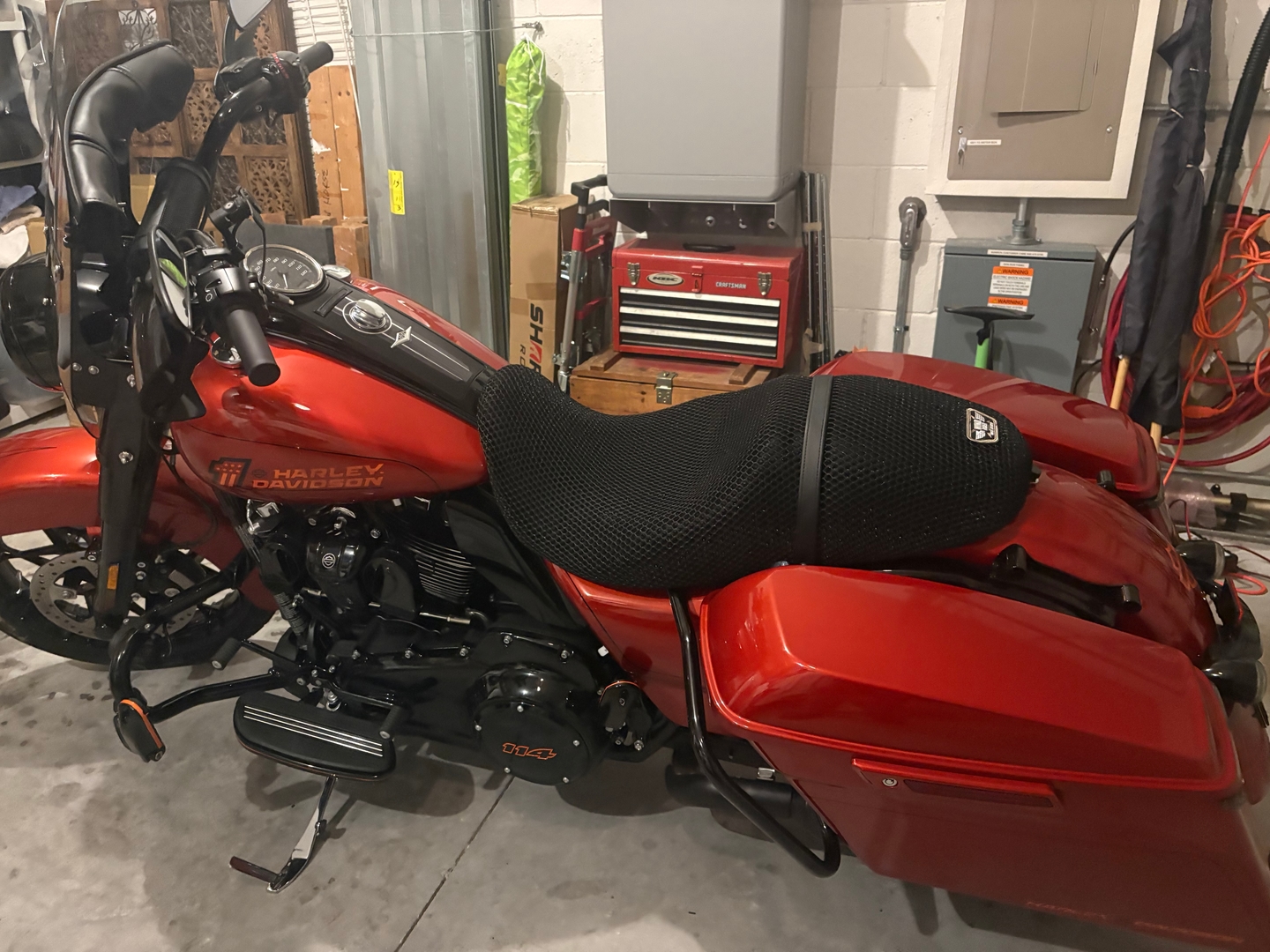
How does a 3D mesh seat cover work?
A 3D mesh motorcycle seat cover works by creating a raised layer of open mesh between you and the seat surface. Instead of sealing against your body the way gel does, the mesh lifts you slightly and leaves an open gap. Air moves through that gap as you ride, so body heat escapes and sweat is not trapped against you.
That single difference, an open structure versus a sealed one, is what separates mesh from gel. Both can take some load off your sit bones. Only one of them lets air move. Here is how they stack up for a hot weather touring rider.
| Feature | Gel pad cover | Raised 3D mesh cover |
|---|---|---|
| Pressure relief | Good at first, can firm up over hours and in cold | Spreads weight while staying breathable |
| Airflow under the rider | None, sealed surface | Open gap, air moves as you ride |
| Heat retention | Holds and returns heat | Breaks up heat buildup |
| Sweat handling | Traps sweat against you | Lets sweat air out, drains water |
| Hot weather suitability | Weak | Built for it |
For a deeper walk through the buying decision, our post on how to pick the right motorcycle seat cover breaks down what matters by climate and riding style.
Where does sheepskin fit in?
Sheepskin deserves a mention because a lot of riders search for it. A sheepskin bike seat cover, also sold as a sheepskin motorcycle seat pad, is natural wool that wicks moisture and feels good in cold and mild weather. BMW touring riders in particular ask about bmw sheepskin seat covers, and motorcycle sheepskin has a loyal following for good reason. It breathes far better than gel.
The catch is heat and care. Sheepskin sits dense and warm, which is welcome in spring and fall but works against you in peak summer sun. It also soaks up rain, takes a long time to dry, and needs more upkeep than synthetic options. If you ride cold climates and value a plush natural surface, the best sheepskin motorcycle seat cover can be a fine choice. If your main fight is summer heat, sheepskin is not the cooling answer it looks like.
Wind Rider Mesh: A Summer First Alternative to Gel
If the heat is your real problem, a motorcycle cooling seat cover built around airflow makes more sense than a sealed gel slab. The Wind Rider mesh seat cover is a raised 3D mesh cover that goes over your existing seat. It is not a replacement seat and not a gel insert. It is a cover that lifts you off the hot surface and lets air move underneath while you ride.
Five things it does for a hot weather rider:
- Creates airflow under the rider so heat is not trapped against you
- Drains water, so a rained on seat is rideable sooner
- Covers a cracked or sun damaged factory seat
- Grips in corners instead of letting you slide forward
- Adds a comfort cushion that spreads weight without sealing in heat
It is cut to your specific bike model, installs in about 5 minutes with velcro straps that loop under the seat (you remove the seat first, no tools needed), and ships free worldwide. There is a 30 day guarantee, so if it does not work for how you ride, send it back for a full refund. If you want the full mechanism and the long ride case for going mesh, our breakdown of the best mesh motorcycle seat cover for long summer rides covers it in detail.
So do gel pad seat covers really help? For a sore tailbone on a cool morning commute, sure, they can take the edge off. For hot weather touring where sweat and trapped heat ruin the day, gel quietly makes the heat worse while it helps the pressure. A raised mesh seat cover handles both sides of the problem at once. If summer heat is your fight, see how the mesh fits your bike on the Wind Rider product page and check your model before your next long ride.
About the author: Rick Donovan. Touring rider, 25 years on Harleys, writes about long-haul comfort and the gear that earns its place on a long ride.