 Log in


BMW R1250GS Seat Cover for Hot Weather Riding
If you ride a BMW R1250GS in warm weather, you already know the moment around mile 90 when the seat stops feeling like a seat and starts feeling like a cast iron skillet. The BMW R1250GS seat cover for hot weather riding is one of the most searched GS upgrades for a reason. Factory GS seats trap heat in ways most riders do not fully understand until they are standing on the pegs somewhere outside Flagstaff in August, waiting for a break that never comes.
This guide breaks down exactly why GS riders deal with more seat heat than most, how the R1250GS seat shape affects cover fit and airflow, what ADV touring riders report about long day heat buildup, and which cover type actually works in warm climates. The goal is to help you make the right call before you spend money on something that does not fix the problem.
Why the R1250GS Creates More Seat Heat Than Most Touring Bikes
The R1250GS is not a narrow bike. The seat sits wide at the base, with 880mm of standard seat height on the low version and 890mm on the standard height. That wide platform means more contact area between your body and the seat surface at any given moment. More contact area means less air movement underneath you, which means heat builds up faster and stays longer.
The GS also spends a lot of time moving at slower speeds on mixed terrain or two-lane backroads where wind speed drops below 45 mph. At 45 mph and under, the natural cooling effect that higher freeway speeds provide largely disappears. Riders touring through Morocco, Baja California, or the American Southwest in July can expect ambient temperatures above 100 degrees Fahrenheit on the road surface. The seat vinyl on a black factory GS seat can hit 140 degrees Fahrenheit under direct midday sun before you even throw a leg over it. Once you sit down, body heat adds to that baseline and the seat surface temperature stabilizes somewhere between 105 and 120 degrees Fahrenheit against the fabric of your riding pants.
The standard factory seat uses a dense closed cell foam with a polyurethane vinyl cover. That vinyl has almost no breathability, and the closed cell foam below it holds heat rather than releasing it. For a post on why factory seats trap heat this aggressively, the detailed material science is covered in our post on why motorcycle seats get so hot in summer heat.
How the R1250GS Seat Shape Affects Cover Fit and Airflow
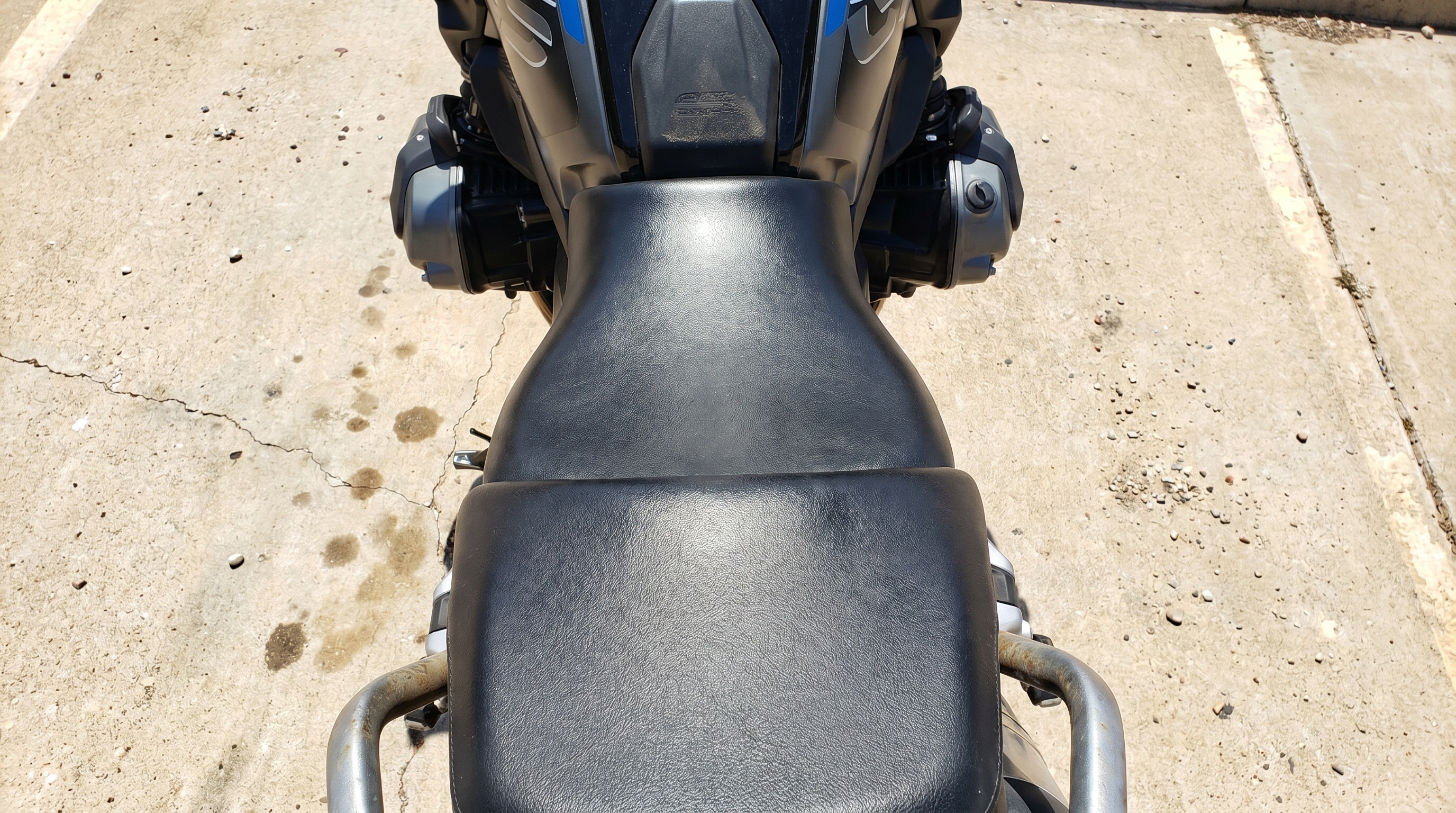
The R1250GS seat is not a flat slab. It has a distinct forward taper on the rider section, a raised rear lip, and a slight dip in the center that positions the rider forward over the tank on technical terrain. The seat also features a two-piece design with a separate rear passenger section, which is relevant if you are also looking for a BMW rear seat cover or BMW rear seat protector solution.
That contoured shape creates a specific problem for off-the-shelf seat covers. A flat mesh panel that works well on a Harley Davidson touring seat will not conform properly to the GS profile. When a cover does not conform, it buckles at the edges, creates pressure ridges across the seat surface, and loses the consistent air gap that makes mesh covers work in the first place. A 6mm raised mesh air gap only delivers its benefit if it holds that spacing uniformly across the seat. Any point where the mesh collapses to zero millimeters is a point where heat builds the same way it does on bare vinyl.
The GS rider section measures roughly 280mm front to back on the seating surface, with a width that tapers from about 340mm at the rear to 220mm near the tank. A cover cut specifically for that geometry will sit flush at the edges, hold the air gap through the contoured center section, and secure under the seat without bunching. A generic cut will not. This is the same principle that applies whether you are looking at an R1200GS seat cover, an older R1100S seat cover, or the current 1250 platform. Fit precision matters more on bikes with complex seat geometry than on flat slab touring saddles.
What ADV Riders Report About Heat Buildup on Long Days
ADV touring riders who put the R1250GS through its paces on routes like the Trans America Trail or the Colorado BDR consistently report the same progression. The first 60 to 90 minutes are fine. Between the 90 minute and 2 hour mark, the seat starts to register. By hour three, most riders are doing what the touring community calls the hot seat dance, shifting weight every 5 to 10 minutes to give one side a break while the other side keeps working. Riders who push through to the 5 and 6 hour mark without a solution often report visible sweat marks on riding pants and the particular misery of wet jeans against a hot vinyl surface.
The GS community on ADVrider forums has documented this pattern extensively. One recurring theme is that riders who make the Phoenix to Vegas run or a similar summer desert crossing in a single day often average a standing-on-the-pegs break every 40 to 50 miles in peak afternoon heat. That is not a comfortable way to ride 400 miles. It is also not a rider fitness problem or a seat foam problem in the traditional sense. It is primarily a heat and moisture problem at the seat surface, and the fix is at the surface, not in the foam.
If you are prepping for a multi-day GS tour and want a full rundown of seat prep steps before a long weekend departure, the checklist in our guide to prepping your seat for long weekend rides covers several variables that trip riders up beyond just cover choice.
Mesh vs Sheepskin vs Gel for Warm Climate GS Riding
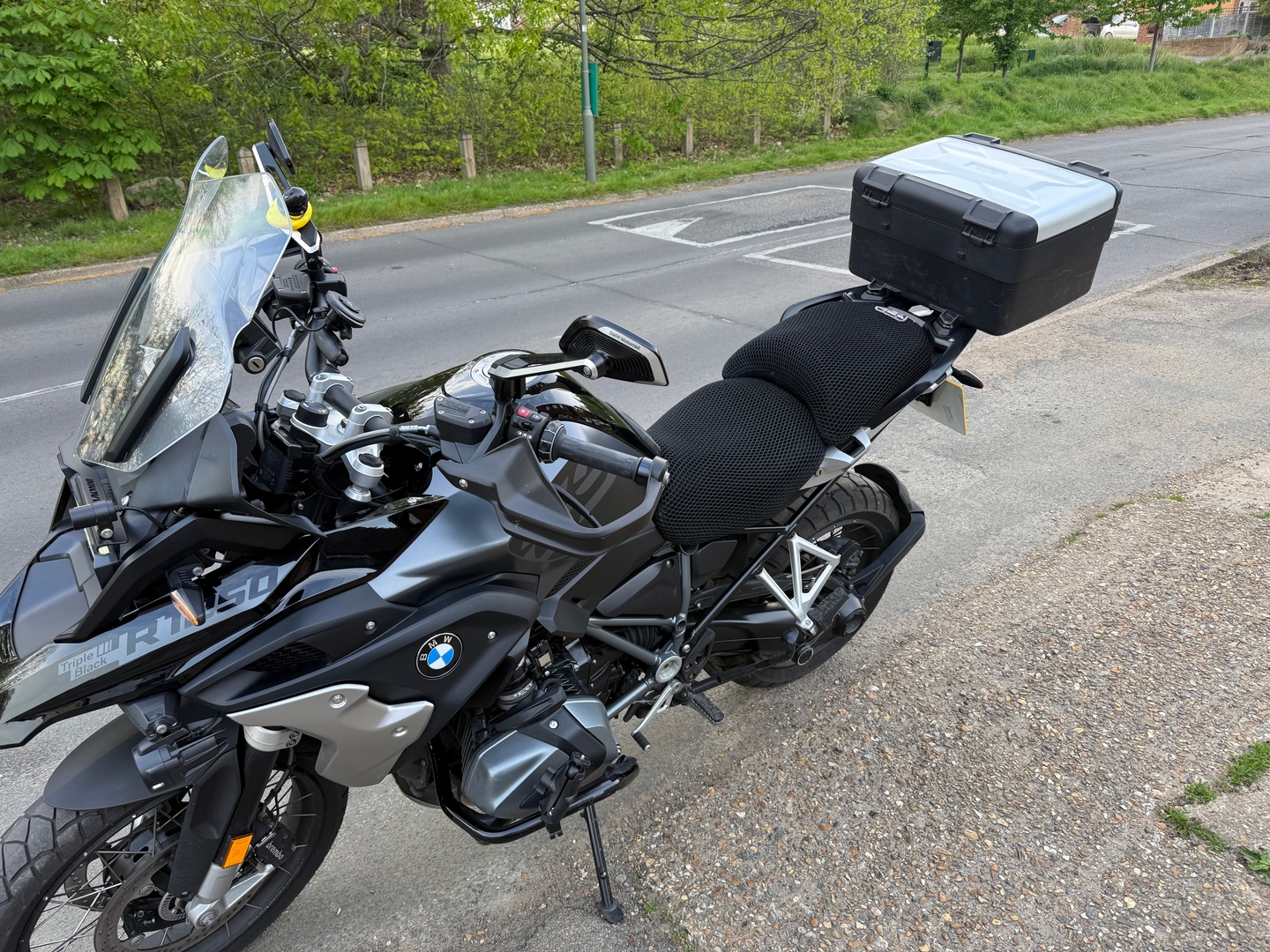
This is the comparison most GS riders are actually searching for. Here is an honest breakdown of all three options for warm weather touring on the R1250GS.
| Cover Type | Heat Performance | Wet Weather | Fit on GS Profile | Typical Price Range |
|---|---|---|---|---|
| 3D Raised Mesh | Best in class. Creates a 6mm air gap that lets heat escape continuously. | Drains fast. Back to dry in 15 to 20 minutes of riding. | Depends on cut. Contour-cut versions fit well. Generic cuts buckle. | $60 to $130 USD |
| Natural Sheepskin | Good moisture wicking but traps radiant heat in temps above 90 degrees Fahrenheit. Works better below 85 degrees Fahrenheit. | Poor. Absorbs water, stays wet for hours, adds weight and odor. | Drapes and conforms reasonably well but adds 8 to 12mm of thickness that affects seat height. | $80 to $180 USD |
| Gel Pad | No airflow benefit. Gel pads reduce pressure point fatigue but do not address heat. The gel itself can feel warm against the body after 30 minutes. | Most gel pads have a non-porous cover that sheds water on the surface but does not wick or drain. | Sits on top of the seat without conforming to contours. Shifts on technical terrain if not strapped securely. | $50 to $150 USD |
The practical takeaway is straightforward. If you ride primarily in temperatures above 85 degrees Fahrenheit, sheepskin is not your best tool. Natural fibers do an excellent job managing moisture in moderate climates, but once ambient heat climbs past that threshold, the dense fiber structure holds radiant heat close to the body rather than releasing it. Gel pads solve a different problem. They are pressure distribution tools, not thermal tools. If you have pressure point fatigue from a seat with low density foam that has already compressed significantly, a gel pad can help. But a gel pad on a hot seat is still a hot seat with softer pressure distribution. For summer riding in climates where the ambient temperature exceeds 90 degrees Fahrenheit regularly, 3D raised mesh is the only cover type that directly addresses the thermal mechanism.
How to Evaluate Any BMW R1250GS Seat Cover Before You Buy
Before committing to a seat cover for your GS, use this checklist to filter out options that will not perform in warm conditions. This applies whether you are evaluating a cover for the R1250GS, the older R1200GS, or even a different platform where the same principles hold.
- Confirm the cover is cut for your exact model and seat configuration, not a universal fit. The R1250GS standard seat and the Rally seat have different geometry, and a cover cut for one will not fit the other correctly.
- Verify the mesh height. A 3D mesh structure should hold a minimum 5mm air gap under rider weight. Less than 5mm and the benefit diminishes sharply as the mesh compresses.
- Check the fastening system. The cover should secure under the seat using velcro straps with no tools required. A cover that uses stretch fabric alone will shift on technical terrain. The install should take about 5 minutes.
- Look for model-specific coverage dimensions. The rider section and passenger section of a GS seat should each have their own cover dimensions, not share one universal panel.
- Confirm drain behavior in wet conditions. A mesh cover that drains in under 20 minutes of riding is acceptable. One that saturates and holds moisture the way sheepskin does is not suitable for mixed weather ADV touring.
- Check whether the manufacturer offers a custom measurement path for aftermarket seats. Many GS riders run Sargent, Corbin, or similar aftermarket seats. If you have an aftermarket saddle, contact the cover manufacturer directly with your bike year and seat brand before ordering.
The BMW seat cover market is not as large as the Harley Davidson seat covers market, which gets far more SKUs and variations from aftermarket suppliers. Search volumes for Harley seat cover options dwarf GS-specific searches by a factor of 50 to 1, which means fewer suppliers optimize for GS geometry specifically. That makes fit verification more important, not less, for GS buyers.
Wind Rider for the R1250GS: Built Around the GS Profile
Wind Rider cuts the mesh seat cover to the specific dimensions of the BMW R1250GS rider section. The 3D raised mesh structure creates a consistent 6mm air gap across the contoured center section of the seat. Under rider weight, that gap compresses slightly but holds enough spacing to keep air moving continuously beneath the rider. In side-by-side comparisons on desert touring routes, riders using mesh covers report the ability to complete 300 to 400 mile summer days without the consistent hot seat dance that plagues bare factory seats in temperatures above 95 degrees Fahrenheit.
The cover secures with velcro straps under the seat in about 5 minutes with no tools. It does not shift on technical terrain, does not add meaningful seat height, and drains quickly after rain so it is ready to use again within 15 to 20 miles. If you ride an aftermarket GS seat from Sargent or a similar brand, reach out to service@windriderseatcovers.com with your bike year and seat brand before ordering. Wind Rider routes those requests through a custom measurement workflow to make sure the cover fits your specific saddle.
For GS riders who want to see the cover, check fit for the 2019 to 2024 R1250GS and R1250GS Adventure, and review current availability, the Wind Rider product page has the full detail.
The R1250GS is built to go everywhere. The seat it comes with was not built for 100 degree Fahrenheit desert crossings. A cover that fits the profile, holds an air gap under load, and installs in 5 minutes is the simplest fix for the problem most GS riders tolerate longer than they should. Check fit for your year and configuration at the Wind Rider product page before your next long day in the heat.
About the author: Rick Donovan. Touring rider, 25 years on Harleys, writes about long-haul comfort and the gear that earns its place on a long ride.