 Log in


3D Mesh Motorcycle Seat Cover: How It Keeps You Cool
You park in the sun for twenty minutes, come back, and the seat is too hot to touch. Then you climb on anyway, do the hot seat dance, and stand on the pegs for the first mile until it cools off. A 3D mesh motorcycle seat cover takes that problem off your plate by putting a ventilated layer between you and the baked vinyl. If you are comparing your cooling options right now, here is how the 3D mesh design actually works, and how it stacks up against sheepskin and gel.
This is not marketing witchcraft. It is a raised weave, an air gap, and simple physics. Once you understand the mechanism, the choice between mesh, sheepskin, and a gel pad gets a lot clearer.
What Is a 3D Mesh Motorcycle Seat Cover?
A 3D mesh motorcycle seat cover is a ventilated fabric layer that sits on top of your existing seat. The mesh is a raised weave with thousands of tiny air channels running through it. Instead of resting on solid vinyl, you sit on the mesh and the air held inside it, which lets heat escape and keeps water from pooling under you.
The key word is raised. Cheap fabric covers lie flat and give you nothing. Real 3D mesh has depth to it. That depth is the whole point, and it is what separates this from a thin slipcover.
How 3D Raised Mesh Lifts You Off the Seat
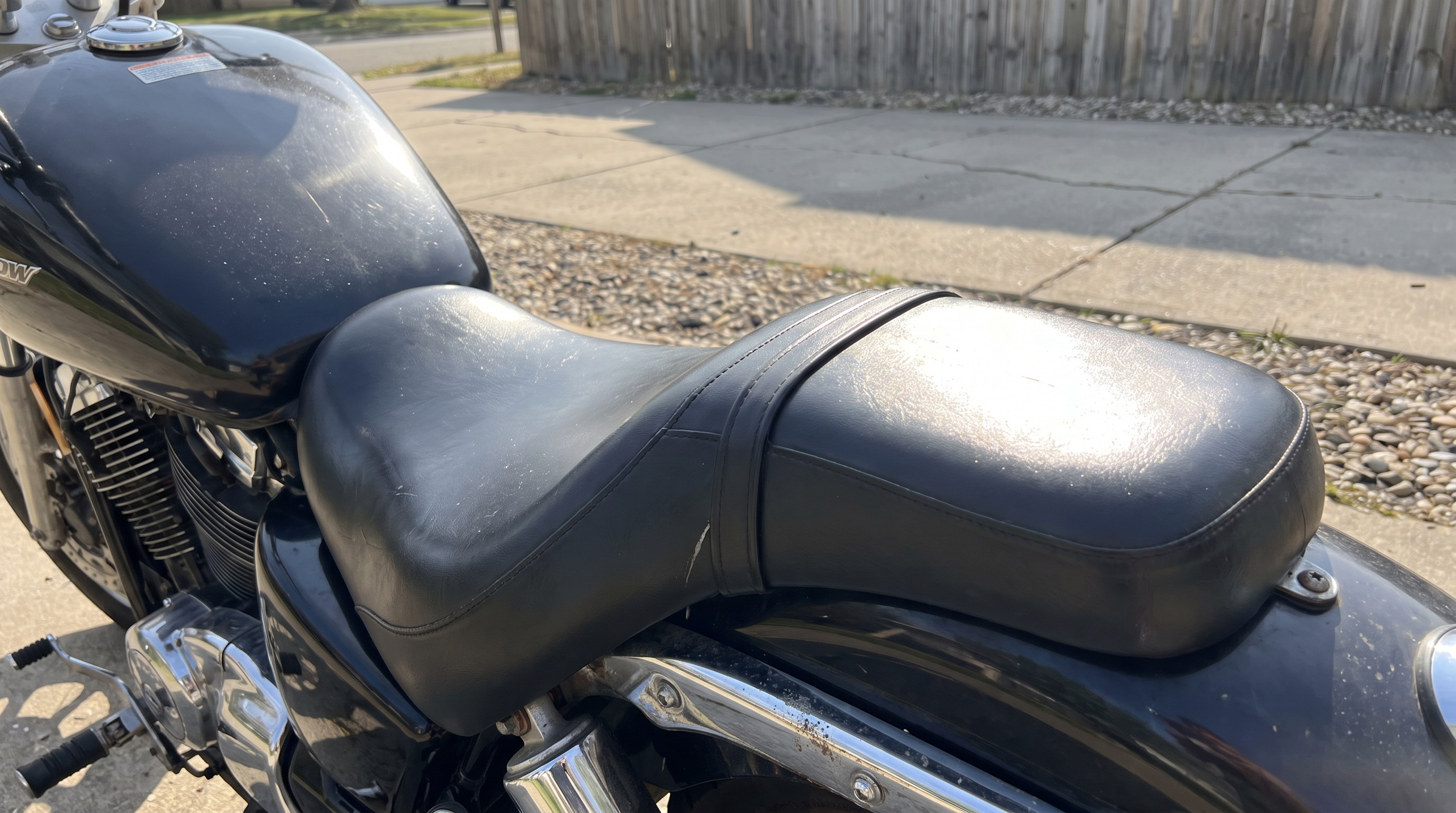
Your factory seat is a slab of foam wrapped in vinyl. Vinyl does two things badly in heat. It soaks up sun like a stovetop, and it traps everything against your body. No air moves. Sweat has nowhere to go. That is where swamp butt comes from.
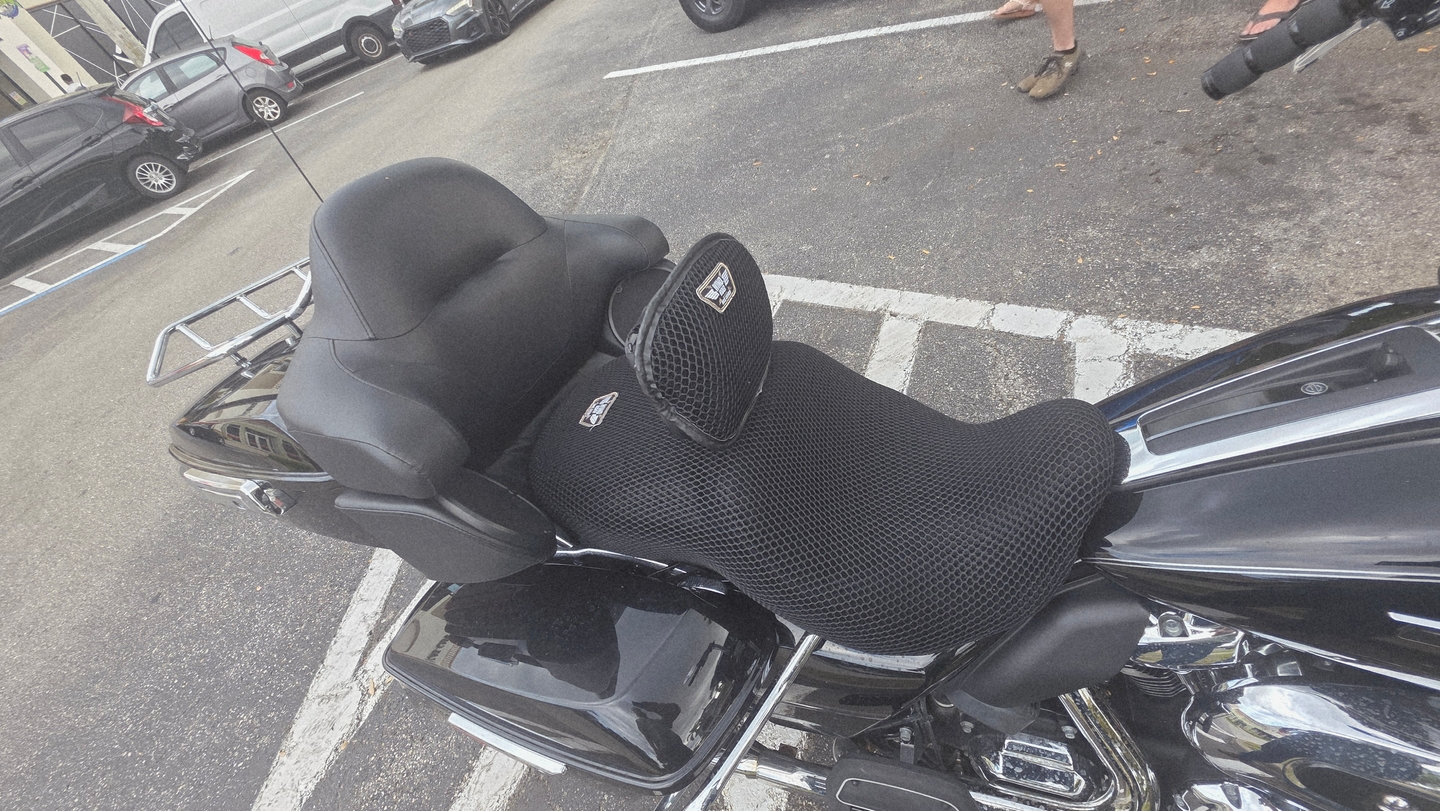
The 3D mesh breaks that up. The raised structure holds you slightly above the seat surface, so you are no longer pressed flat against the scorching vinyl. There is a small gap under you where air can sit and move. Riders describe it plainly: you can feel the air even through jeans. One guy called it witchcraft until somebody explained the mesh to him.
Here is the part that matters most and gets missed in a lot of comparisons. The cooling works in two moments, not just one.
- The sit-down. On a bike that has been parked in the sun, the mesh holds far less heat than solid vinyl. You are sitting on the weave and the air in it, not the baking surface underneath. It is far cooler to get on than a bare seat.
- The ride. Once you are rolling, air keeps moving through the open channels under you. It does not go stagnant like it does against flat vinyl.
It will not stay ice cold in the middle of an Arizona summer, and nobody honest should tell you it will. But it does not bake into a stovetop, and it runs noticeably cooler than the seat you have now. We break the raised weave down further in our guide to how a mesh motorcycle seat cover actually works if you want the full mechanism.
Airflow and Comfort on Long Days
Cooling is the headline, but the same raised structure does something for comfort too. When you sit on flat foam for hours, your weight lands hard on your sit bones. That is where the numb bum and hot spots come from around hour three. The mesh spreads your weight over a slightly wider area and takes some of that concentrated load off.
Be honest about what this is. A 3D mesh cover is not a plush pillow. It adds a little cushion, but the real comfort win over a long day is the combination of moving air and pressure relief. Riders who used to tap out around 250 miles a day tell us they can push further once the heat and the numb spots stop stacking up on them. That is their claim, in their words, and it lines up with the mechanism.
There is one more thing the raised weave handles that flat covers ignore: rain. When you get caught in a downpour, water drains straight through the open channels instead of collecting in a puddle trapped between your legs. You still get wet, but you are not sitting in a sponge for the next hundred miles, and your backside stays a lot drier at the next fuel stop.
3D Mesh vs Sheepskin vs Gel: Which Cooling Fix Wins?
Since you are comparing options, here is a straight look at the three most common cooling and comfort fixes riders ask us about.
| Feature | 3D Mesh Cover | Sheepskin | Gel Pad |
|---|---|---|---|
| Hot weather airflow | Air moves under you | Insulates, holds heat | Solid, no airflow |
| Baked-seat sit-down | Far cooler than vinyl | Warm, absorbs sun | Can get very hot |
| Rain | Drains through | Soaks and holds water | Water sits on top |
| Bulk on the seat | Low profile | Thick, tall | Adds height |
Sheepskin has real fans, and it earns them. A good Australian sheepskin motorcycle seat cover is soft, breaks up pressure, and feels great in cooler weather. That is exactly the problem in summer. Wool is an insulator. The same trait that makes a black sheepskin motorcycle seat cover cozy in fall works against you in July heat, and it soaks up rain and takes forever to dry. If you ride mostly cold and dry, sheepskin makes sense. If you fight heat and swamp butt, it fights back. We dug into where wool helps and where it hurts in our breakdown of whether a sheepskin motorcycle seat pad actually works.
People search for "motorcycle sheepskin," "bmw sheepskin seat covers," "best sheepskin motorcycle seat pad," and even "sheepskin motorcycle seat covers near me," so the demand is real. Just know what you are buying. Sheepskin is a comfort and cold-weather product, not a hot-weather cooling one.
Gel pads are the other big one. A gel insert can smooth out a harsh seat, but gel is a solid mass. No air moves through it, and it can hold heat and get very hot in the sun instead of shedding it. It also adds height and bulk. If your only issue is a hard seat, gel has a place. If your issue is heat and sweat, it does not solve the core problem. Our take on whether motorcycle gel pad seat covers really help walks through the tradeoffs.
Then there is the inflatable crowd. An AirHawk motorcycle seat cover, like the AirHawk cruiser medium, uses air bladders to float you off the seat. Some riders love them for pure pressure relief. Others say it looks like sitting on a diaper and worry about a puncture on a long trip. It relieves pressure, but it does not move air across your backside the way a raised mesh weave does.
Fit and Durability: What to Check Before You Buy
A cover only cools you if it actually fits your seat and stays put. This is where a lot of cheap covers fall apart, so it is worth being picky.
- Shaped for your model. A cover made for your specific bike hugs the seat shape instead of bunching. A baggy universal cover slides around and looks terrible. Match it to your make and model.
- Anti slip grip. Good mesh has grip so you are not sliding forward into the gas tank under braking, and your passenger is not sliding into you. Two-up riders should treat this as non-negotiable.
- Install method. A quality cover uses velcro straps that loop under the seat. You take the seat off, criss cross the straps, pull them tight, and put the seat back on. It takes about 5 minutes and no tools. Check that the seat still locks back onto the bike afterward.
- Weight rating. If you are a bigger rider, the mesh has to actually hold you off the seat, not squash flat. Plenty of heavier riders report the weave still lifts them.
- Weather and sun. The material should shrug off rain and UV without cracking or fading. A cover that fades in one season is not a deal.
One more real-world win: a mesh cover hides a rough seat. High-mileage riders with a cracked or torn OEM seat use one to cover the damage instead of spending hundreds on a reseat. As one rider put it, it covers up all your duct tape sins.
Where Wind Rider Fits In
The Wind Rider mesh seat cover is built on everything above. It is a 3D raised mesh cover shaped for your specific bike model, with velcro straps that loop under the seat for an install that takes about 5 minutes once the seat is off. Air moves under you as you ride, water drains through the weave instead of pooling, the grip keeps you and your passenger from sliding, and it covers a damaged seat you would rather not replace.
We are not going to hard sell you. Plenty of riders order one expecting the usual Facebook ad letdown and end up saying it is no gimmick and as advertised. It ships free worldwide and comes with a 30 day guarantee, so you can try it on your own bike and your own hot rides, and send it back for a full refund if it is not for you. If you run a Sargent, Corbin, Saddlemen, Mustang, or another aftermarket seat, email service@windriderseatcovers.com with your bike and your seat brand and we will check if we make a cover for it.
Ready to stop doing the hot seat dance? Check fit for your bike on the Wind Rider product page and see if the 3D mesh cover is right for your rides.
About the author: Rick Donovan. Touring rider, 25 years on Harleys, writes about long-haul comfort and the gear that earns its place on a long ride.