 Log in


Seat Covers for Harley Davidson Motorcycles: A Buyer's Guide
If you rode into Sturgis this year, you already know the truth about seat covers for Harley Davidson motorcycles. Ten days of parking lots baking in the South Dakota sun, afternoon storms rolling over the Black Hills, and mile after mile in the saddle. Your factory seat shows every one of those miles. This guide walks through what actually matters when you pick a cover, so you spend your money once and ride the rest of the season without a sore backside.
We hear from Harley riders every week. Some want to hide a cracked seat. Some are chasing cooler afternoons. Some just want their bike to look right. All of them want a cover that fits their exact model and holds up. Here is how to sort the real options from the marketing noise.
What to Look for in a Harley Seat Cover
Before you buy, know what problem you are solving. A rider hiding a torn seat needs different things than a rider fighting swamp butt on a Phoenix run. Most Harley owners want a cover that handles more than one job at once.
Here is what separates a good cover from one you regret:
- Fit for your exact model. A Street Glide seat is not a Road King seat. A cover shaped for the wrong seat bunches, slides, and looks cheap.
- Heat handling. Solid vinyl bakes in the sun and cooks you when you sit down. The right cover keeps you off the scorching surface.
- Water drainage. After a storm, most seats hold a puddle right where you sit. A cover that drains means a dry backside at the next stop.
- Grip in corners. A slick cover lets you slide forward into the tank under braking. Grippy material keeps you planted.
- Install without a fight. If mounting it takes tools and an afternoon, you will put it off.
- Covers the damage. A high mileage seat with duct tape sins needs a cover that hides all of it.
Notice comfort is not a single line item. On a Harley touring seat cover, comfort comes from taking heat and pressure off your sit bones over a long day, not from a plush pillow. Riders who tell us they can stay in the saddle longer are not sitting on more foam. They are sitting cooler and drier, and that adds up over hundreds of miles.
Custom Fit vs Universal Harley Seat Cover Replacement
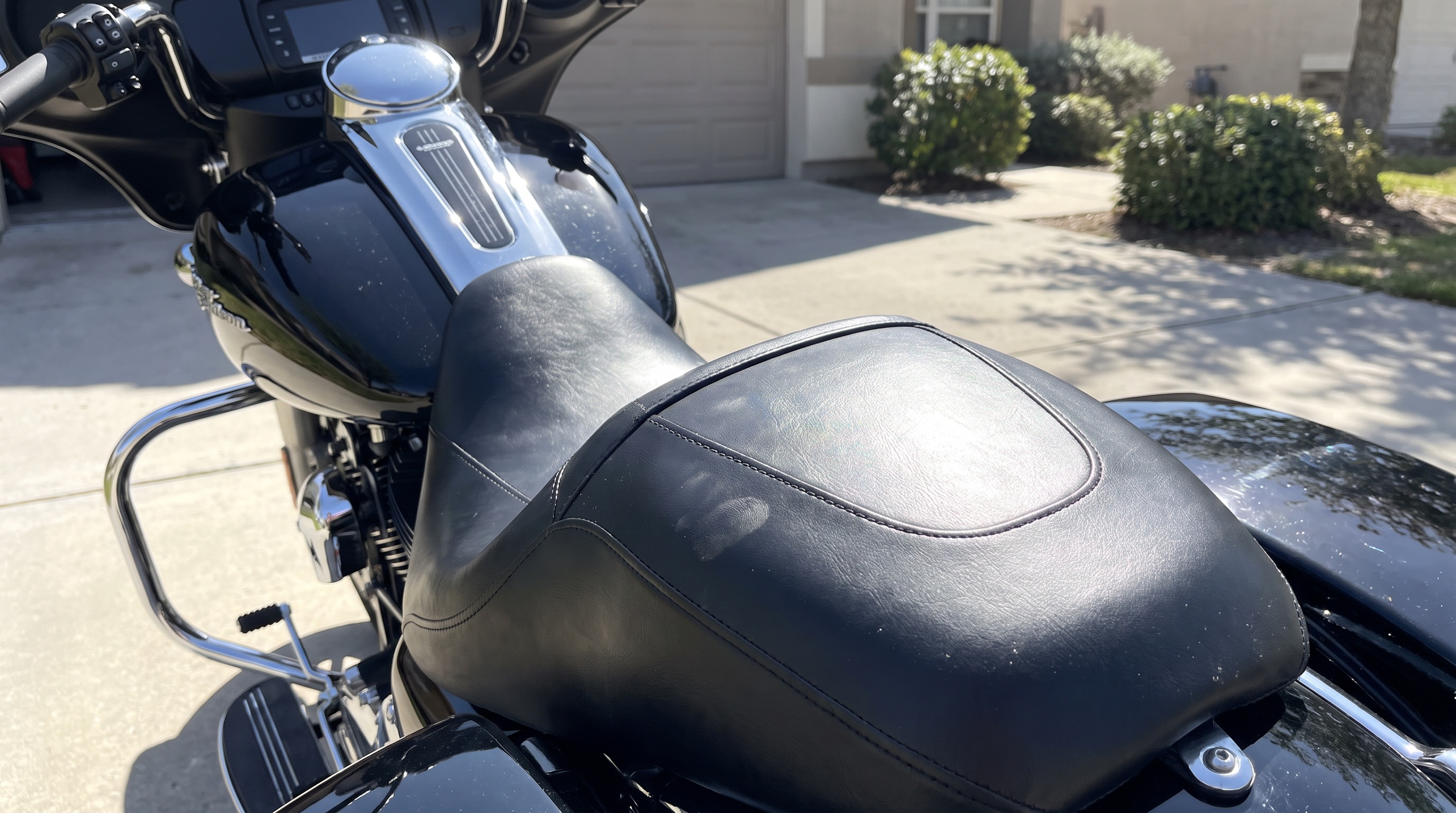
This is the choice that trips up the most riders, and it is the one most likely to leave you disappointed. Universal covers promise to fit anything. In practice, "fits anything" usually means fits nothing well.
A universal cover is cut to an average shape. Your Harley seat is not average. Sportster low profile seats, wide touring saddles, and solo perches all curve differently. Stretch a generic cover over the wrong contour and you get loose folds, edges that flap at speed, and a cover that walks off center after a few rides. That is the complaint we hear most, and it is almost always a fit problem, not a material problem.
Custom Harley seat covers made for your specific model sit flat and stay put. The edges wrap the seat the way they should. This matters even more if you already spent real money on custom leather seats for Harley Davidson bikes or an aftermarket saddle. A cover made for your exact seat shape protects that investment instead of hiding it under a sloppy fit.
If you are weighing your options, we broke down the tradeoffs in detail in our rundown of Harley Davidson seat covers compared for 2026, which lines up the common materials side by side.
A quick word on aftermarket saddles
Plenty of Harley riders already run a Saddlemen, Corbin, Mustang, or Le Pera seat. The workflow is simple: email service@windriderseatcovers.com with your bike and your seat brand, and we will check if we make a cover for your aftermarket seat. That beats guessing with a universal cover that was never shaped for your custom saddle.
Why Airflow Wins in Summer Heat
How do mesh seat covers keep a Harley seat cooler? A raised 3D mesh cover lifts the rider off the solid seat surface and holds an open layer of air underneath. The rider sits on the mesh and the air in it, not the baked vinyl. That layer keeps far less heat than solid material, and air keeps moving through it as you ride.
Two moments matter here, and most riders only think about one. The first is the sit down. Your bike sits in a Sturgis parking lot for three hours. The vinyl seat turns into a stovetop, too hot to touch. With an open mesh layer over it, you sit on the ventilated weave instead of the scorching surface, so it is far cooler the moment you swing a leg over.
The second moment is the ride itself. Solid vinyl traps heat and sweat against you until you get swamp butt and wet jeans. An open mesh layer lets air move under you as you roll. Riders tell us they can feel the air even through denim once they are up to speed. One put it best when he said he would assume witchcraft until told different. It is not witchcraft. It is a gap and moving air.
This is where a lot of the old fixes fall short. Standing on the pegs cools you for a mile, then you sit back down onto the same hot seat. A sheepskin pad feels great in spring but a Harley sheepskin seat cover holds heat in July and soaks up rain. Gel pads add weight and still trap heat against you. Airflow is the fix that works in the exact conditions that make a Harley seat miserable.
Rain, Damage, and the Jobs a Cover Should Handle
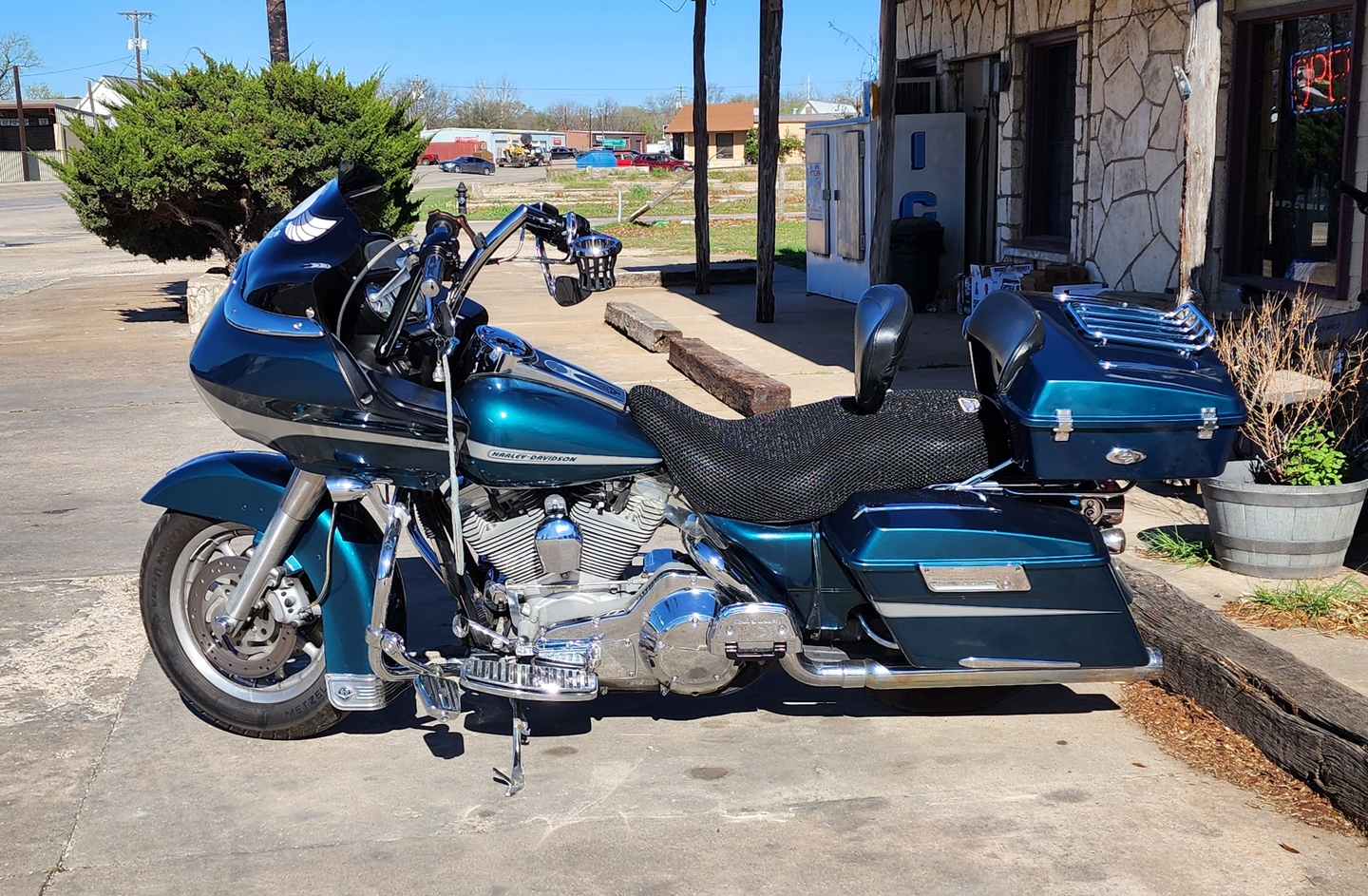
Heat gets all the attention, but any rider who caught the afternoon storms at Sturgis knows the other side of it. A solid seat holds water in a puddle trapped right between your legs. You wipe it, you sit, your jeans soak through anyway. A Harley seat rain cover that drains through instead of holding the puddle means you throw a leg over and stay dry.
Then there is the damage job. Harley riders keep their bikes a long time and rack up serious miles. A seat with a cracked top, a split seam, or years of sun fade is common at 80,000 or 100,000 miles. Buying a full replacement seat runs into real money. Harley seat cover replacement is the frugal move here. A cover that covers up all your duct tape sins costs a fraction of a new seat and looks clean doing it.
If your seat is already coming apart, we walk through the repair versus replace math in our guide to Harley Davidson replacement seat covers that fit, including how a cover buys you years out of a tired seat.
Matching the Look of Your Bagger
A Harley is not just transportation and you know it. The look counts. A cover that clashes with your paint or bunches up at the edges ruins the line of the bike, no matter how well it rides.
A cover made for your model follows the seat's shape, so the profile stays clean from the side. That matters most on a bagger where the seat flows into the bags and the backrest. If you run a backrest on your Harley Davidson touring rig, look for a mesh that will not fray when you open a small hole for the backrest post. A mesh cover ships with no opening by design, so you fit it on the seat first, then make a small opening yourself and seal the edges with a quick pass of a lighter. It takes a minute and keeps the setup looking finished instead of hacked together.
Skip the suction cup seat for Harley Davidson gimmicks and anything that clamps on with hardware you can see. The cleanest look comes from a cover that mounts underneath and disappears into the shape of the seat. From ten feet away it should read like part of the bike, not an accessory bolted on top.
For a broader look at how different styles wear over a season, our overview of Harley motorcycle seat cover options for riders covers the tradeoffs between leather, sheepskin, gel, and mesh.
How to Choose the Right Cover for Your Harley
Put it all together and the decision gets simple. Ask yourself three questions:
- What is my main pain? Heat and sweat point you toward airflow. A cracked seat points you toward coverage. Rain points you toward drainage. The best covers handle all three.
- Does it fit my exact model? A cover made for your specific Harley beats a universal cover every time. This is the single biggest predictor of whether you will be happy.
- Will it hold up two up? If you ride with a passenger, the cover has to keep both of you planted and cool, not just the front seat.
If your honest answer is heat, sweat, rain, and a seat that has seen better days, a raised mesh cover checks every box a leather or sheepskin option cannot in summer.
Why Riders Reach for a Wind Rider Mesh Seat Cover
The Wind Rider mesh seat cover was built for exactly the Harley owner this guide describes. It is made for your specific model, so it sits flat and stays put instead of bunching like a universal cover. The open 3D mesh keeps you off the baked vinyl when you sit down and moves air under you as you ride. It drains rain instead of holding a puddle, grips in the corners, and covers a cracked or faded seat so you skip the cost of a full replacement.
Install takes about five minutes. You pull the seat, criss cross the velcro straps underneath, and lock it back on. No tools, no clamps, no suction cups. It ships free worldwide and comes with a 30 day guarantee, so you can try it on your own bike and send it back for a full refund if it is not for you. Plenty of riders order after a buddy shows up at a rally with one, which is how most of these end up in the parking lot.
Ready to see the fit for your bike? Check the Wind Rider mesh seat cover for your Harley and pick your exact model, or head to the Wind Rider homepage to read what riders on Road Glides, Street Glides, and Ultras have to say after a full summer of miles.
About the author: Rick Donovan. Touring rider, 25 years on Harleys, writes about long-haul comfort and the gear that earns its place on a long ride.