 Log in


Harley Motorcycle Seat Cover Options for Riders
Every Harley rider hits the same wall eventually. The stock seat looks fine in the driveway, then you point it at a 400 mile day in July and your backside files a complaint by the first fuel stop. A good Harley motorcycle seat cover changes that day. The wrong one just adds bulk. This guide walks through your real options, mesh versus leather, fit by model, and how to keep the cover looking right for years.
We hear from Street Glide, Road Glide, Ultra, and Tri Glide riders every week. Most of them already dropped real money on the bike and are not looking to spend another eight hundred on a full seat swap. A cover is the middle path, and there are more choices than most riders know.
Why the Right Seat Cover Matters on Long Rides
On a short run to the coffee shop, the seat under you barely registers. Stretch that same seat over a Sturgis week or a run down Route 66 and small problems turn into big ones. Heat builds. Sweat pools. Your jeans stick. You start doing the hot seat dance at every red light, shifting your weight to find a spot that does not feel like a griddle.
The seat cover you choose decides three things on a long day. First, how much heat sits against you when the bike has baked in a parking lot. Second, whether your backside stays dry or turns into swamp butt by noon. Third, whether you slide forward into the tank every time you brake hard. Those three things add up to how many miles you can ride before you are done for the day.
Riders tell us the same story in different words. They ride farther before needing a break. It is not magic. It is airflow and weight spread over a wider area instead of grinding into the same two spots for hours.
Mesh vs Leather for Hot Weather
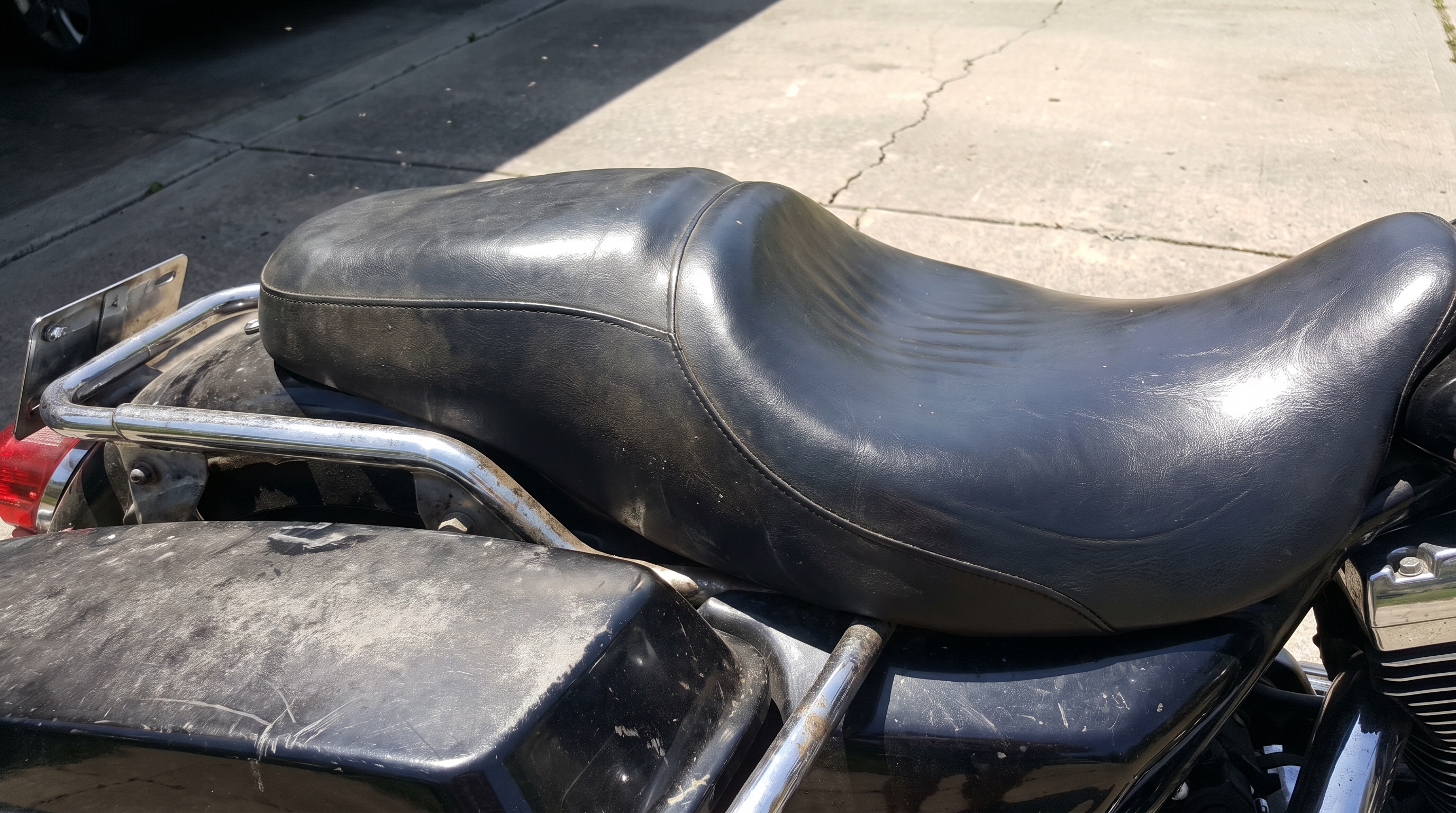
This is the fork in the road for most Harley riders shopping a cover. Both have a place. Neither is right for every rider.
Leather and custom leather seats for Harley Davidson
Leather looks the part on a Harley. There is no arguing that. A custom leather seat for a Harley Davidson holds the classic look, ages with character, and feels solid under you. Riders who chase the showroom look love it, and shops build gorgeous custom Harley seat covers in leather every day.
The problem is heat. Leather is solid material, so it soaks up sun in a parking lot and holds it. Climb on after two hours at a rally and the surface is too hot to sit on comfortably. It also traps sweat against you, because air has nowhere to go. On a cool spring ride, leather is fine. In August in Arizona at 110 plus, leather turns into part of the problem.
Sheepskin and gel
A Harley sheepskin seat cover is the old school comfort pick. Wool breathes better than solid vinyl and adds a soft layer. It is a real option for cooler climates and shorter days. The downside is rain. Wet sheepskin stays wet, and it takes ages to dry out. Gel pads spread pressure but hold heat like leather and add height you may not want on a low profile setup.
3D mesh
Mesh is the hot weather answer. Open 3D mesh is a ventilated weave raised above the seat, so it holds far less heat than solid leather or vinyl. It does not bake into a stovetop while you are inside grabbing lunch. When you climb back on, you are sitting on the mesh and the air held in it, not the scorching surface underneath. Then you roll out and air keeps moving through it as you ride. Riders say they can feel the cooling even through jeans once they get up to speed.
We break down the full head to head in our guide comparing Harley Davidson seat covers for 2026, if you want the deeper look at each material side by side.
Quick comparison
| Material | Hot parked seat | Rain | Best for |
|---|---|---|---|
| Leather | Soaks up and holds heat | Sheds water, but stays warm | Classic look, cool climates |
| Sheepskin | Better than leather | Stays wet a long time | Cooler weather comfort |
| Gel | Holds heat, adds height | Sheds water | Pressure relief, short days |
| 3D mesh | Runs far cooler, no stovetop | Water drains through, dries fast | Hot weather, long touring days |
Fit by Harley Model
Fit is where most seat cover shopping goes wrong. A cover that hangs loose slides around and looks cheap. A cover cut wrong will not let the seat latch back onto the bike. Here is what to watch for across the Harley lineup.
Touring: Street Glide, Road Glide, Electra Glide, Ultra
These are the big mile machines, and a Harley touring seat cover has to work with a passenger. Most touring riders run two up, so the wife's verdict counts as much as yours. Watch two things. First, the backrest. Touring seats often run a rider backrest or a passenger back rest, and the cover needs a clean cut around the post so the edges do not fray. A small cut sealed at the edges holds up fine and will not unravel. Second, the latch. After you fit any cover, check the seat still locks back down onto the bike before you ride off.
Sportster and low profile setups
A Sportster low profile seat is built to keep you close to the bike, and riders who chose it did so on purpose. The last thing you want is a bulky cover that undoes that low sit. Mesh works here because it adds only a thin layer, not a fat cushion. You keep the low profile feel and gain the airflow.
Softail and cruisers
Solo seats on Softails and cruisers are simpler to fit but still need the right cut around the seat shape. The same rule holds. The cover should hug the seat, not float on top of it.
Aftermarket seats
Plenty of Harley riders already run a Saddlemen, Corbin, Mustang, or Le Pera seat they paid good money for. A cover over that seat is completely doable. Because those seats are shaped differently than stock, the cover has to be cut to match. Riders on aftermarket seats email us their bike and seat brand and we work out the custom measurements from there.
Whatever your model, the same principle drives every good result. The cover has to be cut to your exact seat, not a one size guess. Our post on Harley Davidson replacement seat covers that fit digs into why exact fit matters more than any other spec.
What About Rain, Damage, and Slide
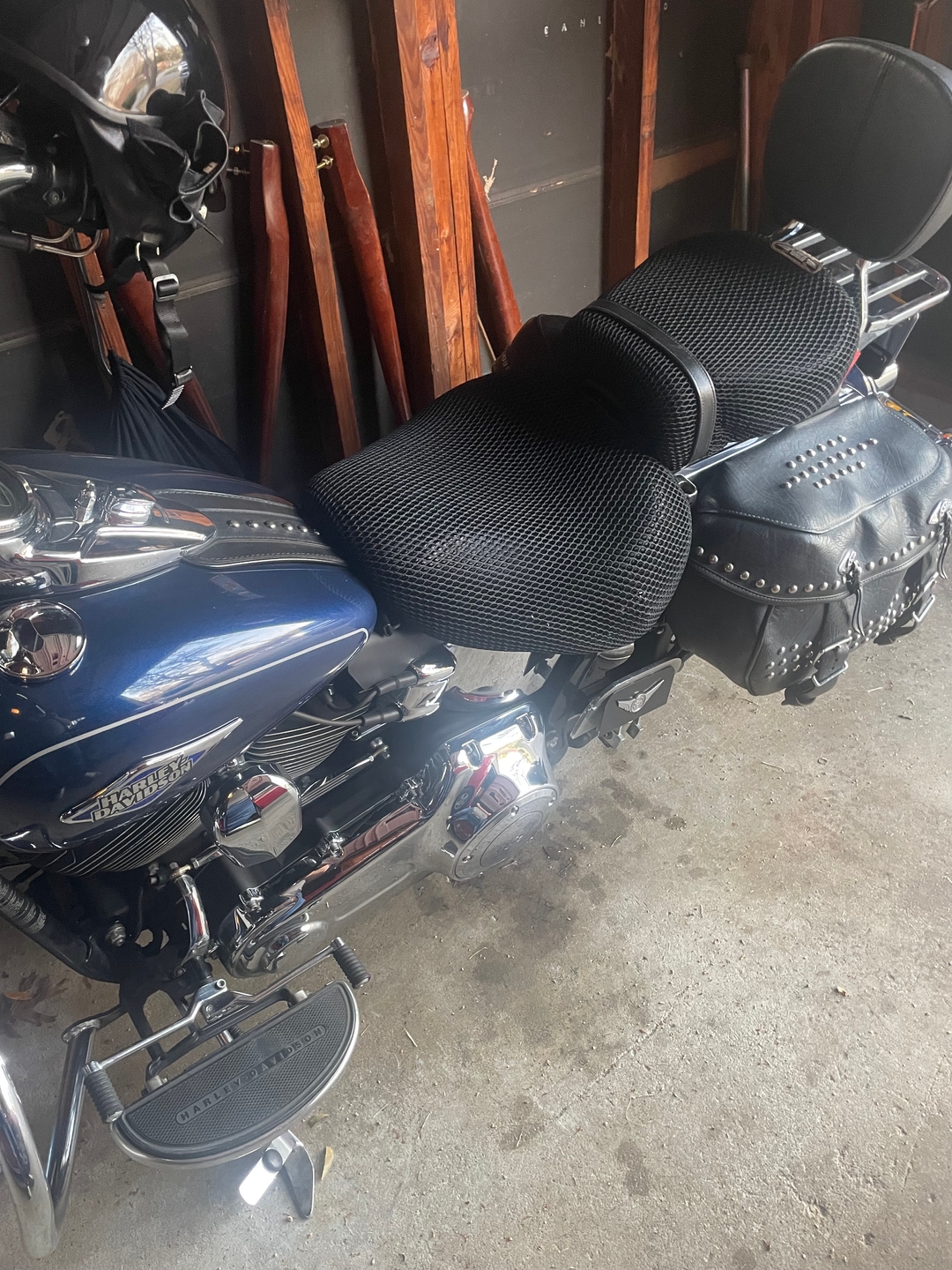
Three problems come up in almost every rider email, so they are worth calling out.
- Rain. A Harley seat rain cover keeps the seat dry when parked, but the second you sit on a soaked seat you are riding in a puddle trapped between your legs. Open mesh drains water straight through, so there is no puddle to sit in and it dries fast in the wind.
- Damaged seats. Not everyone wants a full Harley seat cover replacement. With 116,000 miles on the clock, a lot of riders cannot see buying a new seat over a crack or a tear. A cover hides all your duct tape sins and buys the old seat years more life.
- Sliding forward. A grippy cover keeps you from sliding into the tank under braking and keeps a passenger from sliding into you. A suction cup seat for a Harley Davidson is one approach some riders try. A cover with anti slip grip built into the material is another, and it does not leave marks on your seat.
Care and Cleaning Tips
Whatever cover you choose, a little care keeps it looking right and lasting longer. The routine changes by material.
- Leather. Wipe it down, keep it out of standing sun when you can, and condition it a few times a season so it does not dry and crack. A custom leather Harley seat is an investment, so treat it like one.
- Sheepskin. Brush it out, let it dry fully before you ride, and never store it damp. Wet wool holds a smell.
- Mesh. This is the easy one. Hose it off or wipe it down, and it dries in the wind on your next ride. There is no material soaking up water or holding grime deep in a cushion.
- All covers. After a wash, recheck that the cover is still snug and the seat still latches onto the bike. A loose cover after cleaning is the number one avoidable annoyance.
If you want to see how mesh holds up across a full hot season, our write up on the best Harley seat cover for hot summer rides covers real long ride results.
Where Wind Rider Fits In
If you have read this far, you already know where mesh lands. The Wind Rider mesh seat cover is built for the rider who wants hot weather comfort without swapping out a seat he already likes. It is cut to your specific Harley model, so it hugs the seat instead of floating on it. It installs in about 5 minutes with velcro straps that loop under the seat. No tools, though you do need to pull the seat off first to loop the straps and criss cross them tight.
It does five things on a long day. Air moves under you so the seat runs far cooler than baked leather. Water drains through instead of pooling. It covers a cracked or torn seat. It grips so you are not sliding into the tank. And it adds a little cushion and spreads your weight for the long haul. Riders who were sure it was another gimmick tend to come back saying it works as advertised, which is the highest praise this crowd hands out.
It ships free worldwide and comes with a 30 day guarantee. If it is not for you, send it back for a full refund. To check the fit for your exact Harley and see availability, head to the Wind Rider mesh seat cover product page and pick your model. Your backside will thank you somewhere around mile 300.
About the author: Rick Donovan. Touring rider, 25 years on Harleys, writes about long-haul comfort and the gear that earns its place on a long ride.