 Log in


Motorcycle Hard Covers: What Riders Should Know
You spent good money on your bike, and every part of it takes a beating out on the road. Motorcycle hard covers are the rigid shells that protect the pieces you care about, from your saddlebag lids to your seat and tour pack. If you are riding a heavyweight touring bike and putting real miles down, knowing what these covers do and where they fit into your setup saves you cash and headaches down the line.
Let us break down what hard covers actually protect against, where they belong in your gear, and how they stack up against softer options that keep you comfortable in the saddle.
What Are Motorcycle Hard Covers and What Do They Protect?
Motorcycle hard covers are rigid protective shells fitted over parts of your bike to guard against damage. They shield saddlebag lids from scratches and sun fade, protect the seat from cracking, and cover tour packs and rear seats when a passenger is not riding along. Most are made from molded plastic, fiberglass, or reinforced fabric over a stiff base.
The threats are simple and constant. Sun bakes vinyl until it splits. Rain pools and soaks into seams. Rocks, gravel, and parking lot bumps chip paint and gouge lids. A hard cover puts a barrier between your gear and all of that. If you have ever pulled into a fuel stop and found your saddlebag lid scuffed from a loose bag or a garage door, you already know why riders bother.
Where Hard Covers Fit Into Your Setup
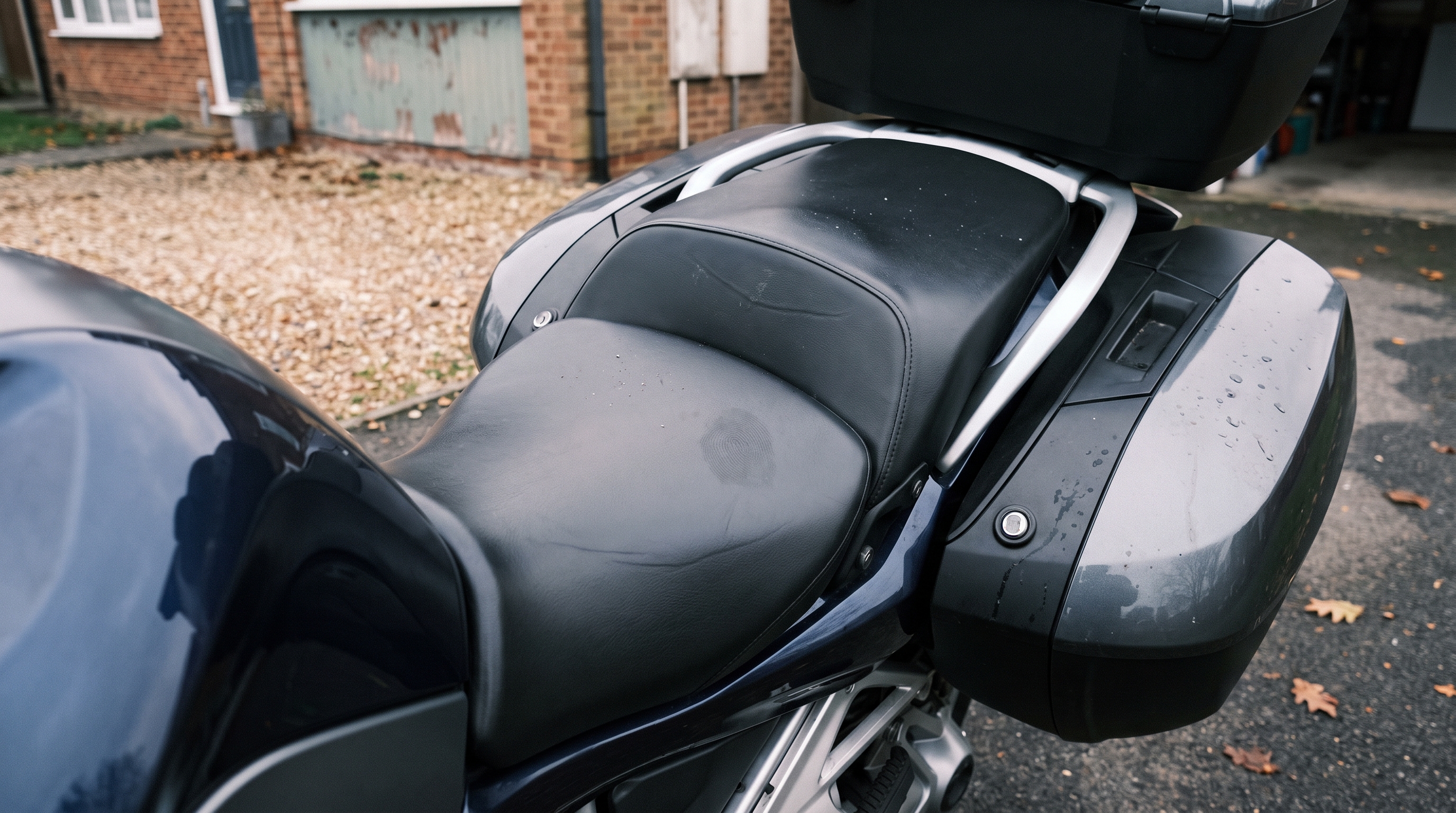
Not every hard cover does the same job, so it helps to think about your bike part by part. Here is where the common ones land:
- Saddlebag lid covers keep your bags looking clean and guard the paint from sun fade and road debris on long hauls.
- Tour pack shells protect the top box, and a Saddlemen tour pack backrest setup adds support for your passenger at the same time.
- A motorbike seat cowl caps the rear seat when you ride solo, giving a cleaner look and keeping the pillion pad out of the weather.
- A BMW rear seat cover or similar solo cowl does the same job on ADV and sport touring rigs.
- Motorcycle seat shade cover options block the sun from cooking your seat while the bike sits parked.
Each one solves a specific problem. The rider who parks in the open all day at Sturgis worries about sun and heat. The rider crossing the country worries about debris and rain. Match the cover to the threat you actually face, not the one a catalog wants you to fear.
What About the Seat Itself?
Your seat takes more abuse than almost any other part of the bike, and it is the one part touching you for every mile. A rigid shade cover or cowl protects the seat when you are off the bike. But the moment you climb on, you need something different. This is where riders get tripped up.
When a stock seat starts to age, the vinyl cracks and lets water in. Riders face a fork in the road: pay for a full motorcycle seat cover replacement, hunt down matching motorcycle seat fabric, or find a cover that goes over the damage. A fresh reupholster with new motorcycle seat cover fabric can run into real money, especially if a shop does the work with a bead motorcycle seat cover finish or piped edges to match your bagger.
Plenty of riders skip all that. As one put it, a good cover "covers up all your duct tape sins." If the foam underneath is still solid, you do not always need to buy a new seat to make it road worthy again. A cover over the top hides the cracks and keeps rain out of the seam. For the rain side of things, our guide on picking a motorcycle seat rain cover to keep your seat dry all summer walks through the options.
Storage vs Comfort: The Tradeoff Nobody Talks About
Hard covers are built for one thing: protection when the bike is parked or in storage. They do their job when you are away from the bike. But they do nothing for you once you are riding, and some actively work against comfort.
A solid shade cover or cowl seals the seat off from air. Great for the winter months when the bike sits in the garage. Not great when you pull off a plastic shell on a summer afternoon and the seat under it is a stovetop. Solid vinyl and hard shells hold heat, and they hold it long after the bike stops moving. That is the swamp butt trap. You protected the seat from the sun, but the seat still baked, and now you are sitting on it.
The same tradeoff shows up with heated gear. A heated motorcycle seat pad is a treat on a cold morning, but it does nothing in July when your real problem is a seat too hot to touch. Storage protection and ride comfort are two separate jobs. One product rarely does both well.
The riders who figure this out stop looking for a single magic cover. They protect the seat when parked, then set it up for airflow and comfort when they ride. Two jobs, two solutions.
Pairing Protection With a Seat You Can Actually Ride On
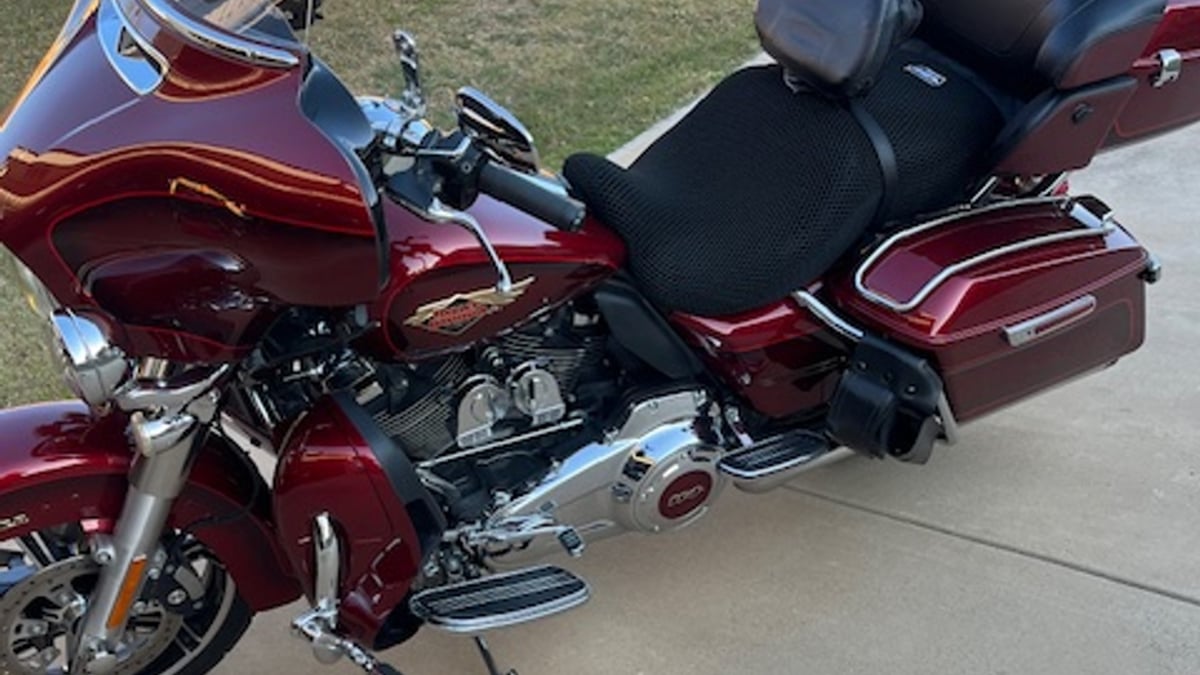
Here is the setup that works for long haul riders. Use a hard cover or shade cover to guard the seat when the bike is parked or stored. Then run something breathable on top for the miles. A raised mesh cover sits over your existing seat and does the comfort job the hard shell cannot.
The mesh works on simple physics. It is a ventilated weave raised above the seat surface, so the rider sits on the mesh and the air held inside it, not the scorching vinyl. When you climb on a seat that has been parked in the sun, mesh is far cooler to sit on than baked solid vinyl, because it does not bake into a stovetop the same way. Then, as you roll, air keeps moving through the weave under you. Riders tell us they can feel the air even through jeans once they get up to speed.
Mesh handles the wet, too. Rain drains through the weave instead of pooling under you, so you are not sitting in a puddle trapped between your legs after a downpour. And it grips. In hard corners and under braking, the texture keeps you from sliding forward into the tank, and keeps a passenger from sliding into you.
If you want more on beating parked heat before a big rally, our post on choosing a motorcycle seat cover for sun to beat the Sturgis heat covers it. And if you are weighing softer natural materials, the breakdown on a lambskin motorcycle seat cover and how to care for it lays out where sheepskin fits.
How to Choose Between Your Options
Every rider is working with a different bike, budget, and set of gripes. A quick way to sort it out:
- Figure out your main threat. Sun, rain, debris, or a seat that is already cracked.
- Decide when you need protection. Parked and stored, or in the saddle on long rides.
- For parked protection, a hard cover, cowl, or shade cover does the job.
- For a cracked or damaged seat, weigh a full replacement against a cover that goes over the top.
- For ride comfort and heat, look for airflow and grip, not a solid shell.
- Do not try to make one product cover every situation. Match the tool to the job.
Big touring riders on Road Glides, Street Glides, Goldwings, and GS rigs land here most often. They already spent real money on a comfort seat, sometimes a Saddlemen or Corbin, and they do not want to bake it or tear it up. The smart move is layering: protect it parked, set it up for airflow riding.
Wind Rider for the Miles That Matter
Hard covers earn their keep in the garage and the parking lot. But the seat you ride on all day is a different problem, and that is what the Wind Rider mesh seat cover was built for. It is shaped for your specific bike model, installs in about 5 minutes with velcro straps that loop under the seat once you have the seat off, and it drops right over your existing seat, cracks and all.
The open 3D mesh keeps air moving under you on hot days, drains rain instead of trapping it, grips you in the corners, and hides a seat that has seen better days. No tools, free shipping worldwide, and a 30 day guarantee so you can put it through real miles before you decide. Skeptics on our reviews page came in expecting a gimmick and stayed for the airflow.
Ready to set up a seat you can actually ride on all day? Check fit for your bike on the Wind Rider product page and see if we make a cover for your model.
About the author: Rick Donovan. Touring rider, 25 years on Harleys, writes about long-haul comfort and the gear that earns its place on a long ride.