 Log in


Custom Motorcycle Seat Covers for Vintage Rebuilds
You spent months on the rebuild. New paint, rechromed pipes, a fresh top end. Then you sit down and the seat lets the whole thing down. Custom motorcycle seat covers are how a lot of riders finish a vintage build without paying a shop to reupholster from scratch. With late summer show season in full swing, plenty of restored bikes are getting one last touch before the next ride out. The seat is usually the last thing riders sort out, and often the thing that ruins a long ride home.
A cover shaped for your machine hides a tired seat, adds airflow, and drains water off the pan when the weather turns. Here is how to match one to an older build and get the fit right.
Why Custom Motorcycle Seat Covers Suit Restored Bikes
Vintage seats age hard. The vinyl cracks, the foam sags, and the seams split where a passenger sat for years. A full reupholstery at a trim shop means pulling staples, cutting new fabric, and hoping the shape comes back right. That is real money and real time. A cover shaped for your exact seat goes over the seat you already have.
Riders tell us the same thing over and over. They have 80,000 or 100,000 miles on a bike and cannot see the point of a brand new seat. One rider put it plainly. A cover "covers up all your duct tape sins." That is the honest appeal. You keep the original seat pan and profile, you keep the numbers on the odometer, and you skip the reupholstery bill.
A cover does not fix a collapsed foam base. If your foam is shot, it needs rebuilding first. But for a seat that just looks tired or feels hot, a fitted cover does the job for a fraction of a motorcycle seat cover replacement done at a trim shop.
Matching a Cover to a Vintage Build
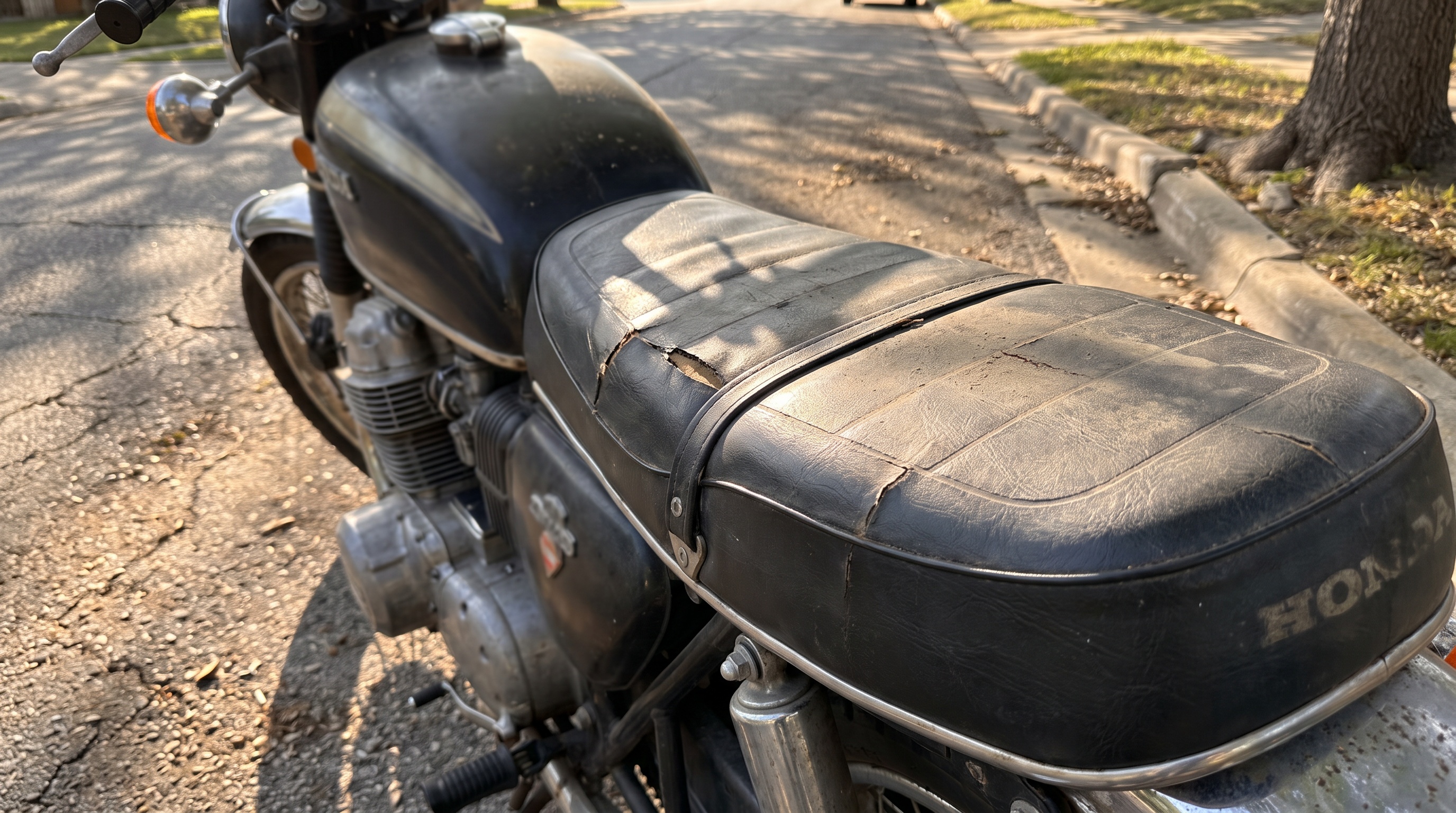
The look matters on a restored bike. You did not polish every fastener to bolt on something that clashes. When you match a cover to a vintage build, think about the same things you thought about with the paint and the chrome.
- Seat shape. Old bikes ran everything from flat bench seats to stepped king and queen setups. The cover has to follow that contour, not fight it.
- Backrest cutouts. Many touring and dresser seats have a backrest post. Some riders make a small cut around the post themselves and seal the edge so it will not unravel.
- Grip. A restored bench seat can be slick. Anti slip texture keeps you from sliding forward into the tank on hard stops.
- Water handling. A waterproof motorcycle seat cover mindset matters on a bike parked outside at a rally. You want water to drain off, not sit in a puddle between your legs.
Some riders go a different route and hunt for a motorbike seat cowl to change the rear profile entirely, or add a rear seat luggage rack for touring. Those are body changes. A seat cover is the simpler path when the shape is right and you just want it to look sharp and ride cool.
Comfort Mods Old Seats Miss
Older seats were built for looks and for the miles people rode back then. A lot of them are flat, hard, and hot. Sit on a restored bench in July and you feel it fast. The vinyl bakes in the sun, and there is no air moving anywhere near you.
This is where a mesh cover changes the day. Solid vinyl soaks up sun and turns into a stovetop in a parking lot. An open 3D mesh weave sits raised above the seat, so it holds far less heat than bare vinyl. When you swing a leg over a bike that has been parked in the sun, you sit on the mesh and the air in it, not the scorching seat. Then, once you are rolling, air keeps moving through the weave under you.
Riders on older machines feel this most. As one put it, "you can feel the air even through jeans." That is the swamp butt fix vintage seats never had. It also spreads your weight over a wider area, which takes load off your sit bones on a long day. It is not a plush pillow. It adds a little cushion and a lot of airflow, and that combination is what makes distance easier. If you are prepping a bike for a big weekend, our guide on how to prep your seat for a long holiday weekend ride covers the same ground for modern bikes.
Fit Tips for Older Seat Shapes
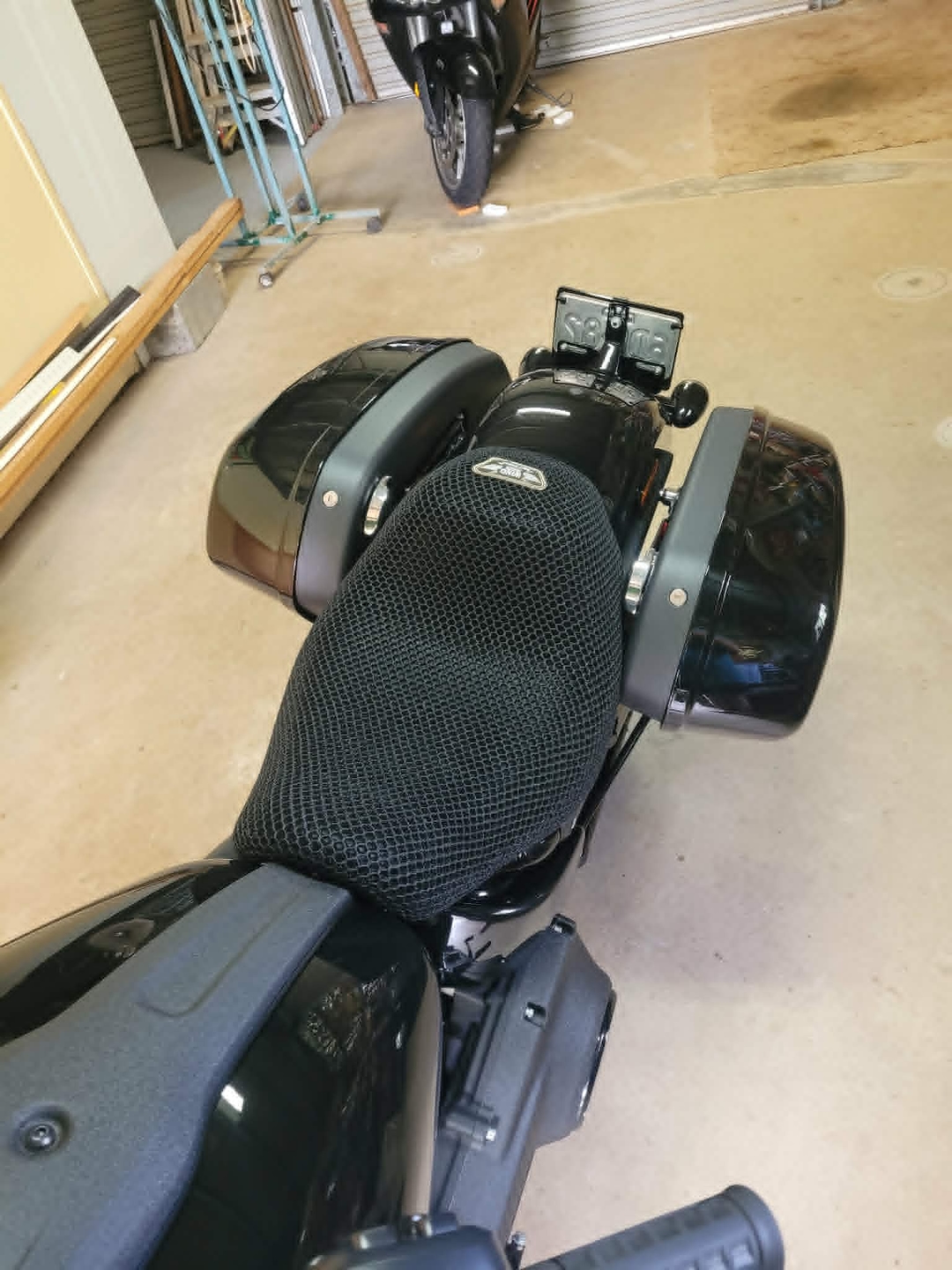
Older seat shapes are the tricky part. Foam has settled unevenly, edges have rounded off, and no two decades of bikes share a profile. Getting a clean fit takes a little patience.
How do you fit a cover to a vintage seat?
You fit a cover to a vintage seat by removing the seat first, laying the cover over the profile, and looping the velcro straps under the pan. Warm the cover in the sun so it stretches, pull it snug over the nose and tail, then criss cross the straps and pull hard. Check that the seat still locks back on before you ride.
A few things save you grief:
- Take the seat off. This is not a slips right on job. The seat has to come off, then the cover goes on properly with the straps underneath.
- Use the sun trick. A warm cover stretches. A cold one fights you. Leave it in the sun a few minutes first.
- Pull, tighten, repeat. Stretch it over the nose, snug the tail, then work the straps. A tight fit is worth the effort on an odd shape.
- Check the latch. Before you call it done, drop the seat back on the bike and make sure it locks. A bunched edge under the pan will stop it seating right.
Install runs about five minutes once the seat is off. It is not hard, it just is not instant. The material is tough, so you can pull on it. That matters on a wide old bench where you need to work the fabric into the contour. Riders heading to Laconia deal with the same fit steps, and our writeup on getting your bike ready for Laconia Motorcycle Week 2026 walks through seat prep before a big rally too.
How Wind Rider Builds a Custom Fit
Wind Rider shapes each mesh seat cover for a specific bike. You tell us your make and model, and the cover comes shaped for that seat rather than a one size stretch square. On restored bikes and aftermarket seats, that matters most. If you are running a Saddlemen, Corbin, Mustang, Le Pera, or a custom trim job, email service@windriderseatcovers.com with your bike and seat brand and we sort the measurements with you.
The cover does five things at once. It moves air under you, it drains water off the seat, it hides a cracked or tired seat, it grips in corners, and it adds comfort cushion over distance. Straps loop under the seat with velcro, no tools past pulling the seat off. Shipping is free worldwide, and there is a 30 day guarantee. If it is not right, send it back for a full refund.
A finished vintage bike deserves a seat that keeps up with the rest of the work. If a vintage show or a long summer run is on your calendar, a fitted cover is a small job with a big payoff. Looking for a gift for a rider who is deep in a rebuild? Our list of gift ideas for the motorcycle rider has more in the same vein.
Ready to see if we have one shaped for your build? Check the fit for your exact bike on the Wind Rider mesh seat cover page and finish that restoration right.
About the author: Rick Donovan. Touring rider, 25 years on Harleys, writes about long-haul comfort and the gear that earns its place on a long ride.